Why Proper Construction Cleaning Matters After Every Build
Summary:
- Construction cleaning removes dust, debris, and residue so a finished space is safe, inspection-ready, and usable.
- Fine particulate from drywall, masonry, and paint can linger in a building long after visible mess is cleared.
- A phased approach, rough cleanup, detail cleaning, and final touch-up, keeps commercial projects on schedule and code-compliant.
A finished building is not truly ready for occupancy until it has gone through a structured cleanup process. Construction cleaning addresses the dust, adhesive residue, and leftover materials that remain after contractors finish a project, closing the gap between construction completion and a space that is safe to use.
This distinction matters because visible tidiness and genuine readiness are not the same thing. A building can look finished while still holding fine particulate in vents, corners, and fixtures that standard housekeeping will not catch. For anyone managing a commercial renovation or new build in Roanoke, TX, understanding what this cleanup actually involves helps set realistic expectations for timelines and inspections.
What Makes Post-Construction Dust Different
Construction debris is not ordinary household dirt. According to a post-renovation cleaning guide, construction dust, chemical residue, mold spores, lead and asbestos can remain in a home long after visible debris is gone. This is why standard mopping and wiping routines fall short after a build.
Fine particulate behaves differently than typical dust as well:
- It resettles from ledges, vents, and ceiling areas even after an initial pass.
- HVAC movement and foot traffic can recirculate it into occupied space.
- Dry dusting methods can make the problem worse rather than better.
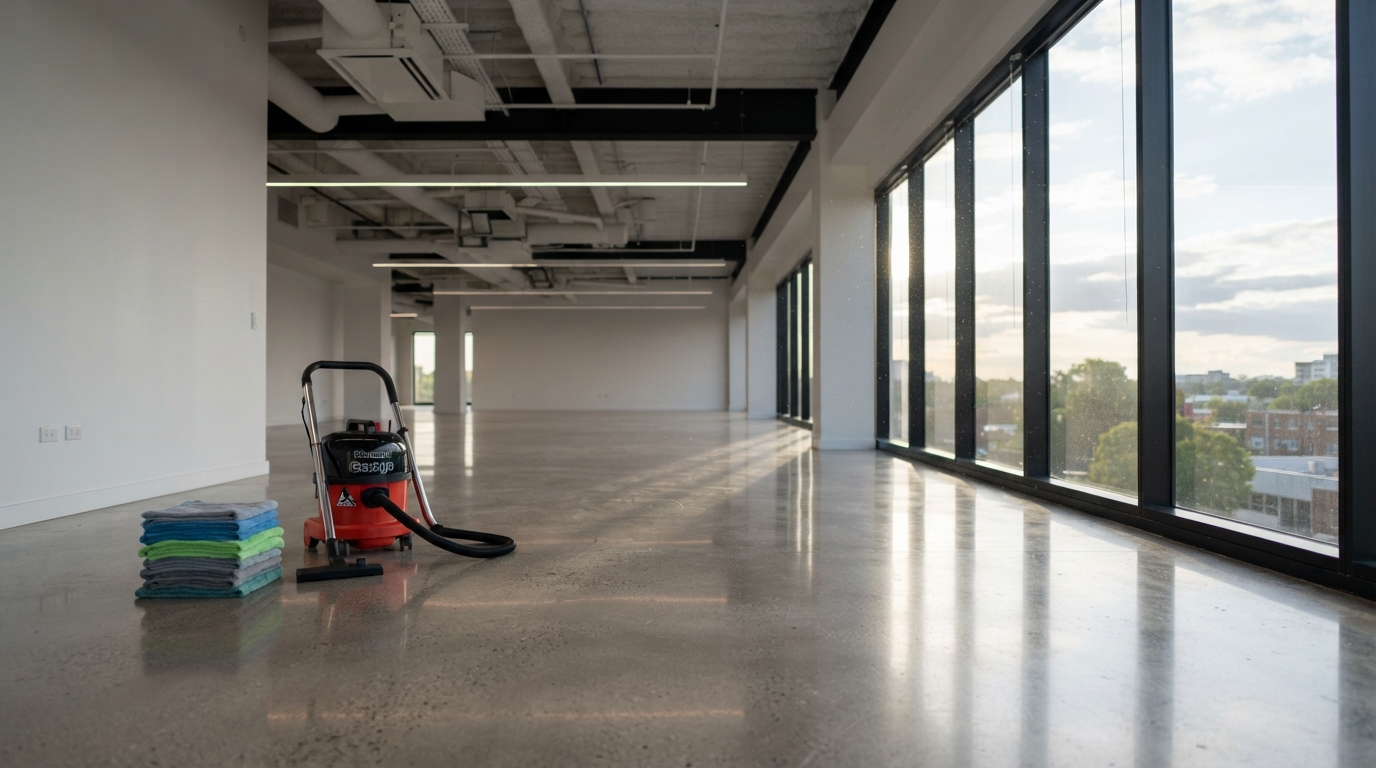
Industry guidance notes that dry dusting with a feather duster or dry cloth for fine construction dust is counterproductive, merely pushing microscopic particles into the air so they resettle elsewhere, whereas damp microfiber cloths and HEPA-filter vacuums capture and remove it effectively. The EPA’s guidance on renovation and dust identifies HEPA filtration as a key tool for managing fine particles generated during remodeling and construction work.
A Phased Approach to Cleanup
Professional cleanup after a build typically follows a sequence rather than a single pass. One industry guide outlines the process in stages:
- Rough cleanup – clearing large debris, packaging, and leftover materials from work zones.
- Detail cleaning – dusting walls, ceilings, fixtures, and wiping down surfaces top to bottom.
- Final touch-up – glass cleaning, floor detailing, and a quality inspection before occupancy.
A guide to post-construction phases confirms this structure, noting that a checklist usually includes debris removal, dust removal, surface wiping, glass cleaning, restroom detailing, fixture cleaning, floor cleaning, residue removal, final polishing, and a quality inspection, with commercial checklists also covering access rules, safety coordination, scheduling, and documentation.
Why Commercial Projects Face Higher Stakes
Commercial buildings face greater cleaning demands than many residential properties, particularly when preparing for inspections and occupancy. Construction debris, hazardous dust, and leftover materials must be addressed before a space is ready for use. Depending on the project and applicable regulations, final inspections may also involve verifying that hazardous materials have been handled properly and that the building meets relevant safety and indoor air quality requirements.
For businesses in Roanoke, TX, preparing to open a new office, retail store, or renovated facility, post-construction cleaning is more than a finishing touch. G&T Corporate Cleaning Services helps businesses prepare their spaces for occupancy by addressing construction dust, debris, and residue on flooring, HVAC return vents, and fixture surfaces. Because hard flooring and carpets require different cleaning methods, a thorough, material-specific approach helps create a cleaner, safer, and more professional environment before employees and customers arrive.
Comparing Cleanup Approaches
| Approach | Dust Control | Typical Result |
| Standard janitorial wipe-down | Limited; dry methods can spread fine dust | Surface appears clean but particulate remains |
| DIY crew cleanup | Varies; depends on tools available | Inconsistent, may miss vents and high areas |
| Structured post-construction cleaning | HEPA vacuuming, damp methods, phased sequencing | Space ready for inspection and occupancy |
Frequently Asked Questions
Does construction cleaning cover exterior areas too? Checklists commonly extend beyond interiors. One industry resource notes that cleanup should cover both inside and outside, including dusting, mopping, sanitizing, and power washing areas like driveways.
Why does dust reappear after a cleanup pass? Fine particulate can redistribute from hidden surfaces. As one guide explains, fine dust can resettle from ledges, vents, ceiling areas, HVAC movement, and foot traffic, so proper sequencing, HEPA filtration, and a final pass after dust has settled help reduce recurring dust.
Is this type of cleaning only needed for new construction? No. Renovations, remodels, and partial build-outs generate similar dust and residue, so the same phased cleanup principles apply regardless of project size in Roanoke, TX.
What tools make the biggest difference in dust removal? HEPA-filtered vacuums and damp microfiber methods are repeatedly cited as the most effective tools for capturing fine construction particulate rather than redistributing it into the air.
Final Thoughts and Next Steps
Based in the USA, G&T Corporate Cleaning Services serves customers across Roanoke, TX, and more details on its service area are available through the business’s regional profile. Published details for Contact G&T Corporate Cleaning Services cover the areas served near Roanoke, TX.