How Teenagers Can Take More Ownership of Their Martial Arts Training
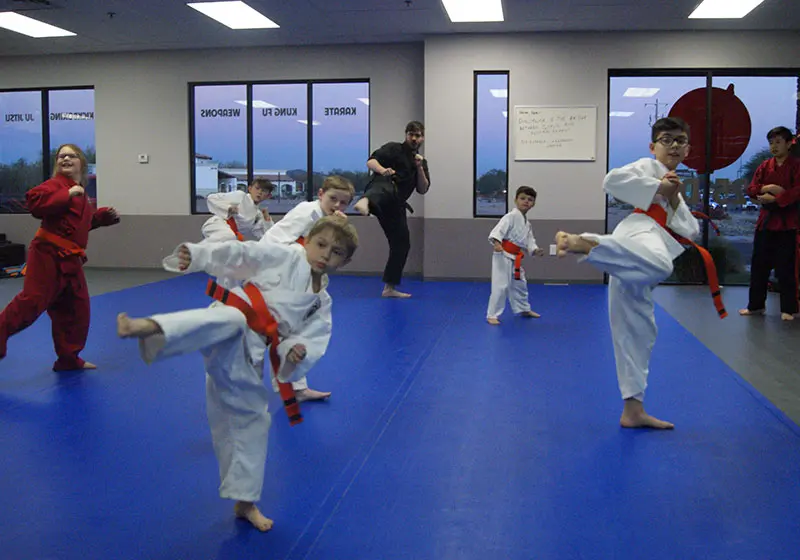
Teenagers can take greater ownership of martial arts training by becoming active participants in their own development rather than simply showing up and following instructions. That means preparing for class, setting realistic goals, listening carefully to feedback, practicing consistently, asking useful questions, and learning to evaluate their own progress.
For teens enrolled in Martial Arts Classes, this shift can be an important part of maturing as a student. Parents and instructors still provide guidance, but teenagers can gradually assume more responsibility for how they approach each lesson and what they do with the instruction they receive.
Ownership does not mean training alone or deciding that instructor guidance is no longer necessary. It means learning to participate with greater intention.
What Does Taking Ownership of Martial Arts Training Mean?
A teenager who takes ownership of training begins thinking beyond simply completing the class.
They may start asking themselves questions such as:
- What am I working to improve today?
- Which correction did my instructor give me last time?
- Which part of this technique still feels unfamiliar?
- Am I listening carefully before I begin?
- What can I do differently on the next attempt?
- Am I giving the same effort when a skill becomes difficult?
These questions encourage a student to become more aware of the learning process.
In Martial Arts Lessons, instructors can demonstrate techniques, correct mistakes, explain concepts, and provide direction. The student still has to pay attention, make adjustments, and apply that information.
That responsibility becomes increasingly important as teenagers mature.
Why Is Preparation Part of Taking Training Seriously?
Ownership begins before class starts.
A teenager who arrives prepared has fewer distractions competing for attention. Preparation may be as simple as knowing the class time, bringing what is needed, arriving ready to participate, and mentally shifting attention away from the rest of the day.
This does not require an elaborate routine.
The goal is to avoid treating class as something that begins only after an instructor repeatedly redirects the student.
A prepared teenager can enter the training environment ready to listen and participate.
For parents, this can also mean gradually transferring age-appropriate responsibilities to the teen. Instead of reminding them of every detail indefinitely, parents may encourage them to keep track of their own class schedule or prepare what they need ahead of time.
Small responsibilities can reinforce the idea that martial arts is their activity, not simply something organized for them.
How Can Teens Set Better Martial Arts Goals?
Goals are more useful when they are specific enough to guide behavior.
A teenager might say, “I want to get better at karate.” That is understandable, but it does not provide much direction.
A more useful goal might be:
- Improve balance during a particular movement.
- Remember a sequence without needing as many reminders.
- Keep better posture throughout a technique.
- Listen to the entire instruction before beginning.
- Apply a correction consistently during class.
- Attend training regularly for the next month.
These goals focus attention on something the student can actively work toward.
Teenagers exploring Karate for Teenagers can benefit from understanding that progress usually develops through many smaller improvements rather than one dramatic breakthrough.
A student does not need to solve every difficulty at once. Choosing one or two meaningful areas of focus can make training more manageable.
Why Should Teens Learn to Ask Better Questions?
Asking questions is part of learning, but the quality of the question matters.
Instead of saying, “I don’t get it,” a student can try to identify the specific point of confusion.
For example:
“Should my weight be more centered here?”
“Am I stepping too far?”
“Is this movement supposed to happen before or after the turn?”
Questions like these show that the student has attempted to understand the instruction and is now looking for clarification.
This is an important skill during Karate Training because martial arts involves many details that may not become obvious immediately.
Learning how to identify what is unclear also improves self-awareness. The teenager is no longer waiting passively for someone else to notice every difficulty.
They are learning how to participate in solving the problem.
How Should Teenagers Respond to Instructor Feedback?
Feedback is one of the most valuable parts of structured training.
It can also be uncomfortable.
A teenager may believe they performed a movement correctly and then receive a correction. Another student may be asked to repeat something several times. Someone may understand a concept mentally but struggle to perform it physically.
Taking ownership means learning not to interpret every correction as criticism.
Instead, a student can treat correction as information.
A useful response might involve three steps:
- Listen fully before trying again.
- Identify the specific change being requested.
- Apply that change on the next attempt.
The ability to accept and use feedback can make Martial Arts Lessons more productive because students spend less energy defending an error and more energy improving it.
What If Progress Feels Slow?
Some skills take longer than others.
A teenager may understand one technique quickly and struggle with another for weeks. That difference does not automatically indicate a problem.
The more useful question is whether the student continues working through the challenge.
Atkinson’s Martial Arts incorporates the Black Belt Principles of Honesty, Courtesy, Integrity, Perseverance, and a positive attitude into the student journey. These principles can provide a practical framework for dealing with difficult periods in training.
Honesty may involve recognizing that a technique still needs work.
Perseverance can mean continuing to practice when improvement is gradual.
A positive attitude does not require pretending that something is easy. It means approaching the next attempt as another opportunity to learn.
Integrity can also become relevant when students are responsible for the effort they give, even when an instructor or parent is not constantly reminding them.
How Can Teens Evaluate Their Own Progress?
Self-evaluation is different from self-criticism.
A student who constantly thinks, “I’m bad at this,” is not conducting a useful evaluation. That statement is too broad and does not identify what should change.
A better approach is to look at specific evidence.
For example:
“I remembered the first part, but I lost track during the transition.”
“My balance was better until I tried to speed up.”
“I understood the correction, but I forgot it on the next repetition.”
These observations are useful because they point toward the next step.
Teenagers can learn to evaluate performance without labeling themselves as either talented or untalented.
That mindset can be particularly helpful when training becomes more challenging.
Why Is Consistency Part of Student Ownership?
A student cannot control every interruption.
School commitments, family obligations, illness, travel, and unexpected schedule changes sometimes interfere with training.
Ownership is not about maintaining a perfect attendance record. It is about treating training as a meaningful commitment and returning to the routine after disruptions.
A teenager who regularly attends Martial Arts Classes is more likely to maintain continuity with material that was introduced previously.
They may remember corrections more easily and have more opportunities to reinforce developing skills.
Consistency can also reduce the pressure to make every class extraordinary. Progress can come from repeatedly doing the work rather than expecting immediate results.
Should Teenagers Practice Outside of Class?
Any practice outside formal instruction should stay within what the student has already been taught and can perform appropriately.
The objective is not to invent new techniques or try increasingly difficult movements without supervision.
Instead, teens may benefit from reviewing familiar material when appropriate, thinking through sequences, or reflecting on instructor feedback.
Even mental review can have value as an organizational habit.
For instance, a student might take a moment after class to remember the main correction they received that day. Before the next class, they can remind themselves of that correction.
That simple habit creates continuity between sessions without turning home practice into unsupervised instruction.
How Can Parents Encourage Ownership Without Taking Over?
Parents can support teen martial arts training without managing every detail.
This balance can be difficult.
A parent naturally wants their teenager to succeed, particularly when they are investing time and energy into an activity. However, repeatedly reminding a teen about every class, correction, goal, and responsibility can unintentionally keep the parent in charge of the student’s training.
Instead, parents can ask open questions.
“What did you work on today?”
“What was challenging?”
“Did your instructor give you anything specific to work on?”
“What do you want to improve next?”
These questions allow the teenager to explain their own experience.
Parents can still provide encouragement and logistical support while leaving space for the teen to think about their own progress.
Does Taking Ownership Mean Becoming More Independent From the Instructor?
Not exactly.
Greater ownership should make instructor guidance more useful, not less important.
A student who becomes more engaged may listen more closely, ask clearer questions, remember previous corrections, and arrive with a better understanding of what they need to work on.
That creates a more productive relationship between instruction and individual effort.
The instructor still provides technical direction and class structure.
The student’s responsibility is to engage with that instruction.
This distinction matters because martial arts should not become a process of teenagers attempting to teach themselves skills they have not been shown.
Ownership is about becoming a stronger student, not replacing the teacher.
How Can Teens Handle Comparison With Other Students?
Comparison can distract from meaningful progress.
One teenager may learn a movement quickly while another needs more repetition. Students may enter Karate Classes for Teenagers with different athletic backgrounds, coordination, confidence levels, and previous experience.
Those differences make direct comparisons unreliable.
A more useful comparison is often between the student’s current ability and their own earlier performance.
Can they remember more?
Is their movement more controlled?
Are they responding to feedback more quickly?
Do they recover from mistakes without becoming as frustrated?
Are they more prepared when class begins?
These changes may be less visible than simply comparing belt levels or physical ability, but they can provide a clearer picture of individual development.
What Does Greater Ownership Look Like Over Time?
There is no single moment when a teenager suddenly becomes a fully independent martial arts student.
The change is usually gradual.
At first, a parent may remind the teen about class. Later, the teenager begins keeping track themselves.
Initially, an instructor may repeat the same correction several times. Eventually, the student recognizes the issue and begins correcting it without another reminder.
A beginner may wait for instructions before thinking about improvement. With experience, the student may enter class already aware of what they want to refine.
These small changes represent greater engagement with training.
Martial Arts Ownership Is Built Through Everyday Choices
Taking responsibility for martial arts development does not require teenagers to become perfect students.
It means becoming more active in the process.
Preparing for class, listening carefully, responding constructively to feedback, setting useful goals, maintaining a consistent routine, and evaluating progress thoughtfully can all help a teenager become more engaged in training.
The broader lesson is that improvement requires participation.
In martial arts, instructors provide direction, correction, and structure. Teenagers increasingly learn how to take that guidance and decide what they will do with it.
That growing sense of responsibility can make each class more purposeful while helping students understand that progress is something they participate in creating.
About Atkinson’s Martial Arts
Atkinson’s Martial Arts provides martial arts instruction for kids, teens, and adults in Peoria, Arizona, with an emphasis on martial arts development, practical self-defense, and personal growth. Chief Instructor Sensei Andrew Gunn is listed by the school as a fifth-degree black belt in Kenpo Karate and a black sash in Chuan-Fa; families interested in the dojo can find their Peoria location on Google Maps or call 623-825-3656 for program information.