How Does Trailer Wrap Design Change for Detachable Equipment Trailers?
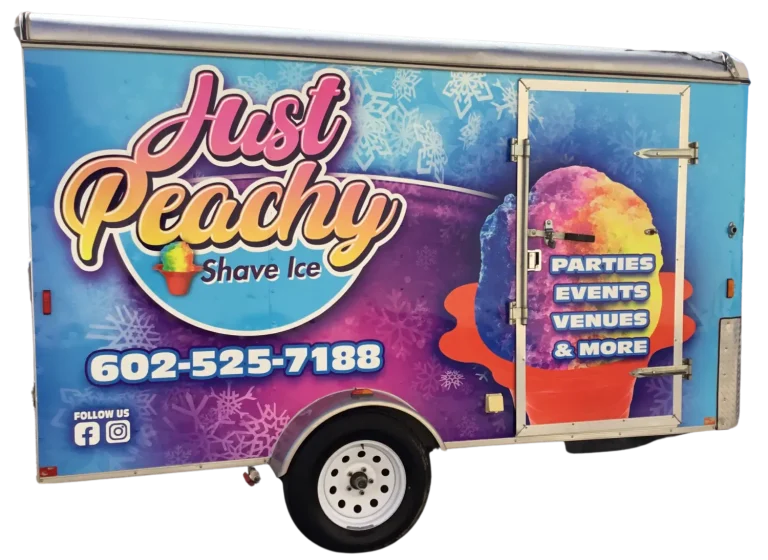
Trailer wrap design changes for detachable equipment trailers because removable sections, loading mechanisms, exposed hardware, and changing operating configurations affect where graphics can be installed. Professional wrap planning focuses on suitable exterior surfaces while keeping branding recognizable without interfering with equipment loading, trailer connections, or necessary safety features.
Equipment trailers are commonly used by construction contractors, equipment rental companies, landscaping businesses, and organizations transporting machinery between job sites. Unlike enclosed cargo trailers, many equipment trailers have open decks, exposed structural components, and removable or movable parts.
Some also feature detachable goosenecks that allow machinery to be loaded from the front of the trailer.
These differences influence the design and installation of custom trailer wraps, particularly when a business wants consistent branding across multiple vehicles and equipment configurations.
For businesses in Surprise, Arizona, understanding these characteristics can help establish realistic expectations about graphic coverage and how branding will appear when equipment trailers are parked, connected to towing vehicles, or actively transporting machinery.
What Makes Detachable Equipment Trailers Different From Standard Trailers?
Detachable equipment trailers differ from conventional enclosed trailers because their construction emphasizes equipment transportation, loading access, and operational flexibility.
The term can describe equipment trailers that are disconnected from towing vehicles during ordinary use. In specialized heavy-haul applications, it can also refer to detachable gooseneck trailers with front sections designed to separate from the main deck.
These configurations create different considerations for vehicle graphics.
Open Decks Provide Less Continuous Branding Space
Enclosed cargo trailers typically offer large exterior walls where logos, company information, and graphics can be displayed.
Equipment trailers may have open platforms, exposed steel frames, fenders, removable ramps, and relatively narrow side rails.
Consequently, the available space for graphics can be considerably smaller.
A design created for an enclosed cargo trailer may not translate well to an open equipment trailer.
Professional designers must identify the surfaces that can accommodate readable graphics without interfering with loading or equipment transportation.
Detachable Components Change the Trailer’s Appearance
Some equipment trailers contain components that can be removed, repositioned, or adjusted.
These may include loading ramps, side extensions, protective structures, and specialized front connections.
The appearance of the trailer can change depending on whether these components are installed or removed.
If a company’s branding is concentrated on a detachable component, the logo may become temporarily absent when that component is separated from the trailer.
This makes graphic placement an important consideration.
Heavy-Haul Trailers Have Specialized Connections
Detachable gooseneck trailers are designed for transporting heavy machinery and other substantial loads.
Their front sections can separate from the main deck to create a loading arrangement suitable for certain equipment.
Manufacturer documentation from Ledwell and Landoll describes detachable gooseneck systems with specialized loading mechanisms, hydraulic components, and connection hardware.
These systems are functional parts of the trailer and should not be treated as ordinary decorative surfaces.
Professional graphic planning must account for the equipment’s design and operating requirements.
How Does a Detachable Gooseneck Affect Trailer Wrap Design?
A detachable gooseneck changes the relationship between the trailer’s front section and main deck.
Because the front assembly is designed to separate during specific loading operations, its branding requirements differ from those of a conventional fixed trailer.
Graphics Must Account for Separating Components
A large graphic that visually continues from the gooseneck onto the main deck may appear connected when the trailer is assembled.
However, that continuity disappears when the gooseneck is detached.
This does not make continuous designs impossible, but it changes how they should be evaluated.
For example, a business might prefer placing its primary logo on a suitable section of the main trailer body rather than relying entirely on the detachable gooseneck.
Smaller supporting graphics may be considered for other appropriate surfaces.
The goal is to preserve recognizable branding even when the trailer’s configuration changes.
Connection Mechanisms Must Remain Functional
Detachable gooseneck trailers contain specialized connection systems.
Depending on the manufacturer and model, these may include locking mechanisms, hydraulic components, pins, and other equipment.
Graphics should not interfere with these mechanisms or conceal required inspection and maintenance areas.
Vinyl installation must also avoid restricting the movement of detachable components.
The appropriate graphic coverage depends on the equipment manufacturer’s instructions and the selected wrap material’s specifications.
Loading Configurations Influence Graphic Visibility
A detachable gooseneck trailer may look substantially different during loading than it does during transport.
When the front section is separated, portions of the trailer become more exposed while other areas change position.
Branding placed on surfaces that remain visible in multiple configurations may provide a more consistent appearance.
However, graphic coverage should never take priority over loading access, mechanical operation, or equipment safety.
Why Do Loading Ramps and Removable Components Require Special Consideration?
Loading ramps are among the most important functional components of equipment trailers.
Depending on the trailer’s construction, ramps may fold, slide, detach, or remain connected through specialized hinges.
These movements create limitations for conventional vinyl applications.
Moving Parts Can Affect Vinyl Durability
A wrap film installed across an area that repeatedly bends, folds, or experiences mechanical contact may encounter conditions outside its intended use.
A folding ramp, for example, contains moving sections and contact points that differ from a stationary painted panel.
These areas may experience abrasion, vibration, and direct contact with transported machinery.
Professional installers should evaluate whether any proposed surface is appropriate for the selected material.
Removable Ramps Can Interrupt Branding
A company may want its trailer branding to remain recognizable while loading equipment.
However, removable ramps may be detached and stored separately.
A large logo placed on one of these components may not remain visible when the ramp is removed.
For businesses using trailer graphics across multiple equipment trailers, this makes the placement of primary branding particularly important.
Logos and essential company information generally benefit from locations that remain part of the trailer’s normal operating configuration.
High-Contact Areas Present Additional Challenges
Equipment trailers frequently transport machinery with substantial weight and exposed metal components.
Loading equipment can bring tires, tracks, buckets, or other parts into contact with trailer surfaces.
These high-contact areas are not equivalent to protected decorative panels.
Vinyl should not be expected to withstand direct equipment abrasion simply because it is manufactured for vehicle applications.
Professional planning considers these limitations before determining graphic coverage.
How Can Trailer Wraps Maintain Consistent Branding When Trailers Are Detached?
One advantage of consistent trailer branding is that a business can remain identifiable even when a trailer is parked separately from its towing vehicle.
However, this requires a different approach from designing graphics that depend on the truck and trailer appearing together.
Trailers Should Have Their Own Recognizable Identity
Consider a Surprise-based equipment rental company that uses several towing trucks and open equipment trailers.
A particular trailer may be connected to different trucks throughout the week.
When it is parked independently at a job site or equipment yard, the towing vehicle’s branding may no longer be visible.
Placing recognizable company information on suitable trailer surfaces allows the equipment trailer to retain its own visual identity.
This approach can support consistency without requiring graphics to match the towing vehicle’s exact dimensions.
Logos Need to Work Within Limited Space
Equipment trailers may provide narrow fenders, frame sections, or selected flat panels rather than large enclosed walls.
This can limit the size of logos and supporting information.
A design containing several lines of small text may become difficult to read on these surfaces.
Instead, professional designers may prioritize the most recognizable brand elements and adapt their proportions to the available space.
The objective is readability rather than maximizing the amount of information displayed.
Different Towing Vehicles Should Not Change Brand Recognition
A business may operate pickup trucks, medium-duty vehicles, or other towing equipment.
Each vehicle can have different dimensions and body styles.
If the trailer’s graphics depend heavily on a particular towing vehicle, the overall appearance may become inconsistent when the combination changes.
A coordinated design system can preserve recognizable branding across different truck-and-trailer arrangements.
This is especially relevant for companies managing equipment trailers used by multiple crews.
Why Does Trailer Construction Matter for Vinyl Material Selection?
Equipment trailers frequently have exterior surfaces that differ from conventional automotive body panels.
These can include painted steel, powder-coated metal, aluminum, diamond plate, and textured components.
Not every material is suitable for conventional vinyl wrapping.
Painted Metal Surfaces Require Evaluation
Painted trailer panels may provide suitable application surfaces when their coatings are stable and compatible with the selected wrap film.
However, equipment trailers can experience considerable wear during transportation and loading.
Scratches, damaged coatings, rust, and previous repairs may affect the available application areas.
Vinyl should not be used to conceal corrosion or unstable paint.
Appropriate surface preparation and material compatibility remain important.
Textured Metal May Limit Application Options
Diamond plate and textured metal surfaces are common on utility and equipment trailers.
Their raised patterns create different application conditions from smooth painted panels.
The surface geometry may limit how reliably conventional vinyl adheres.
A professional installer should evaluate the specific material and texture rather than assuming the surface can be wrapped.
High-Wear Components May Be Better Left Unwrapped
Certain trailer components experience frequent physical contact.
Examples include loading surfaces, tie-down areas, and equipment-contact points.
Applying decorative vinyl to these areas may expose it to conditions beyond its intended application.
A well-planned design does not require every visible component to receive graphics.
Leaving functional surfaces uncovered can help maintain a more appropriate separation between branding and equipment operation.
How Do Safety Markings Affect Custom Trailer Wraps?
Commercial trailers may be subject to requirements involving lighting, reflectors, identification, and retroreflective markings.
These requirements depend on the trailer’s configuration, manufacturing date, dimensions, weight classification, and applicable regulations.
A decorative wrap should not obstruct required safety features.
Reflective Tape Must Remain Compliant
The Federal Motor Carrier Safety Administration explains that certain trailers are subject to requirements for retroreflective sheeting or reflectors on their sides and rear.
FMCSA
For relevant trailers manufactured on or after December 1, 1993, federal conspicuity requirements were established through National Highway Traffic Safety Administration rules.
Not every equipment trailer is subject to identical requirements.
Professional wrap planning should therefore account for the specific vehicle rather than assuming a single marking arrangement applies universally.
Lights and Identification Must Remain Visible
Equipment trailers may contain clearance lights, brake lights, turn signals, license plates, and identification markings.
Graphics should not cover required lighting or identification areas.
This consideration becomes especially important on equipment trailers with limited exterior space.
A small available panel may appear attractive for branding but still contain necessary functional features.
Safety and legal requirements take priority over decorative coverage.
Graphic Design Cannot Replace Required Markings
A brightly colored commercial graphic is not automatically equivalent to compliant retroreflective material.
Similarly, a decorative stripe should not be assumed to satisfy a trailer’s conspicuity requirements.
Any applicable safety markings should be maintained according to the relevant regulations and manufacturer specifications.
How Does Trailer Storage Affect Graphic Visibility?
Equipment trailers often spend time parked at construction sites, storage yards, equipment rental facilities, and commercial properties.
Their appearance in these settings may differ from their appearance during transportation.
Parked Trailers May Be Viewed From Different Angles
A trailer parked alongside other equipment may expose only one side.
Another trailer may be stored with its rear facing a roadway or parking area.
These conditions influence which graphic surfaces are most visible.
Businesses can consider their normal storage arrangements when discussing logo placement.
However, the design should remain suitable for the trailer’s primary function.
Transported Equipment Can Obscure Branding
An equipment trailer may carry excavators, compact loaders, lifts, or other machinery.
Depending on the load, that equipment can partially obscure graphics installed along the trailer’s frame.
A company logo that looks prominent on an empty trailer may become less visible when machinery is loaded.
For this reason, graphic planning should consider the trailer in both loaded and unloaded configurations.
Equipment Changes Can Affect the Overall Appearance
A trailer used for transporting compact machinery may later carry different equipment.
These changes can alter which areas remain visible.
A branding strategy that relies entirely on a particular load configuration may offer limited flexibility.
Placing essential graphics on suitable trailer components that remain consistently exposed can help accommodate different equipment arrangements.
What Should Businesses Confirm Before Scheduling Trailer Wrap Installation?
Professional trailer wraps require accurate information about the trailer’s construction, existing condition, and intended use.
This becomes particularly important for detachable equipment trailers because the available surfaces can change with their operating configuration.
Trailer Type and Equipment Configuration
A conventional equipment trailer, open flatbed, and detachable gooseneck trailer may have substantially different graphic requirements.
Details about removable components, loading mechanisms, and exterior hardware help establish the available coverage.
Photographs and measurements of the actual trailer can provide more useful design information than a generic illustration.
Existing Surface Conditions
Equipment trailers may have worn paint, damaged coatings, or areas exposed to repeated abrasion.
These conditions can influence material compatibility and installation planning.
The surfaces intended for graphics should be evaluated before finalizing production.
Branding Priorities and Coverage
Some businesses may prefer simple identification graphics, while others want a more extensive coordinated appearance.
The appropriate coverage depends on the available surfaces and how the trailer is used.
For businesses exploring custom trailer wraps in Surprise, Fast-Trac Designs provides professional trailer graphic design, printing, and installation services.
Their team can discuss the trailer’s construction and intended branding while evaluating the surfaces suitable for the proposed application.
Why Is Professional Planning Important for Detachable Equipment Trailers?
Detachable equipment trailers present a combination of visual and functional considerations.
Their removable components, loading systems, exposed frames, and specialized connection hardware may limit the areas available for vinyl.
However, those limitations do not eliminate opportunities for effective branding.
A professional design can use suitable surfaces to maintain recognizable company information while avoiding interference with the trailer’s operation.
The process also requires realistic expectations about material performance.
Graphics installed on equipment trailers may encounter substantial environmental exposure, road debris, and demanding operating conditions.
Their suitability depends on the selected product, application surface, and intended use.
Professional planning helps distinguish appropriate branding surfaces from components that should remain uncovered.
Balancing Equipment Trailer Branding With Everyday Function
Detachable equipment trailers require a different graphic approach from ordinary enclosed trailers.
Removable goosenecks, loading ramps, exposed hardware, limited panel space, and changing transportation configurations can influence where branding is practical.
For equipment rental companies, contractors, and fleet operators, maintaining a recognizable identity does not necessarily require extensive vinyl coverage.
Instead, effective trailer vinyl wrap planning considers the vehicle’s actual construction, functional requirements, and available surfaces.
Graphics should remain visually coordinated while respecting necessary equipment access, required markings, and material limitations.
By accounting for the trailer’s complete operating configuration, businesses can develop branding that complements their equipment rather than interfering with how it is used.
About Fast-Trac Designs
Since 2007, Fast-Trac Designs has provided custom graphics and printing services from its Phoenix, Arizona, location, serving customers in Surprise and surrounding communities. Their work includes trailer wraps, commercial vehicle graphics, and professional installation by certified installers. For project inquiries, customers can contact them at (623) 780-1168 or view their Phoenix office on Google Maps.