Common Garage Door Opener Problems and Repair Options
Snapshot:
- Garage door opener problems in Old Bridge, NJ range from dead remotes and misaligned sensors to worn gears and failed logic boards.
- Most issues can be diagnosed quickly, but some require professional repair to stay safe.
- Local opener repair and installation services are available for both residential and commercial properties.
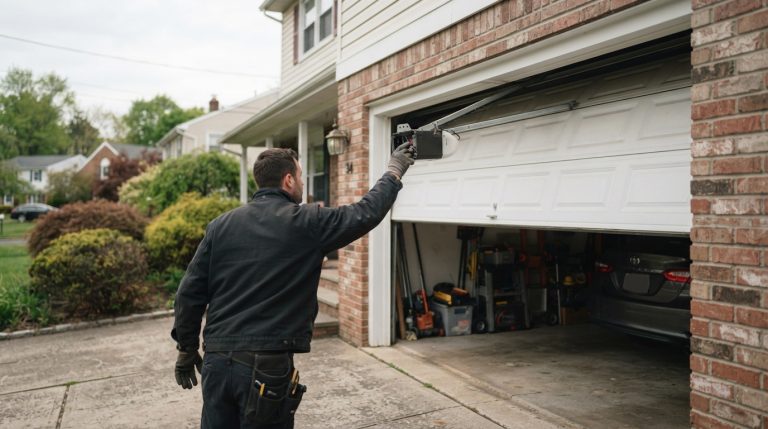
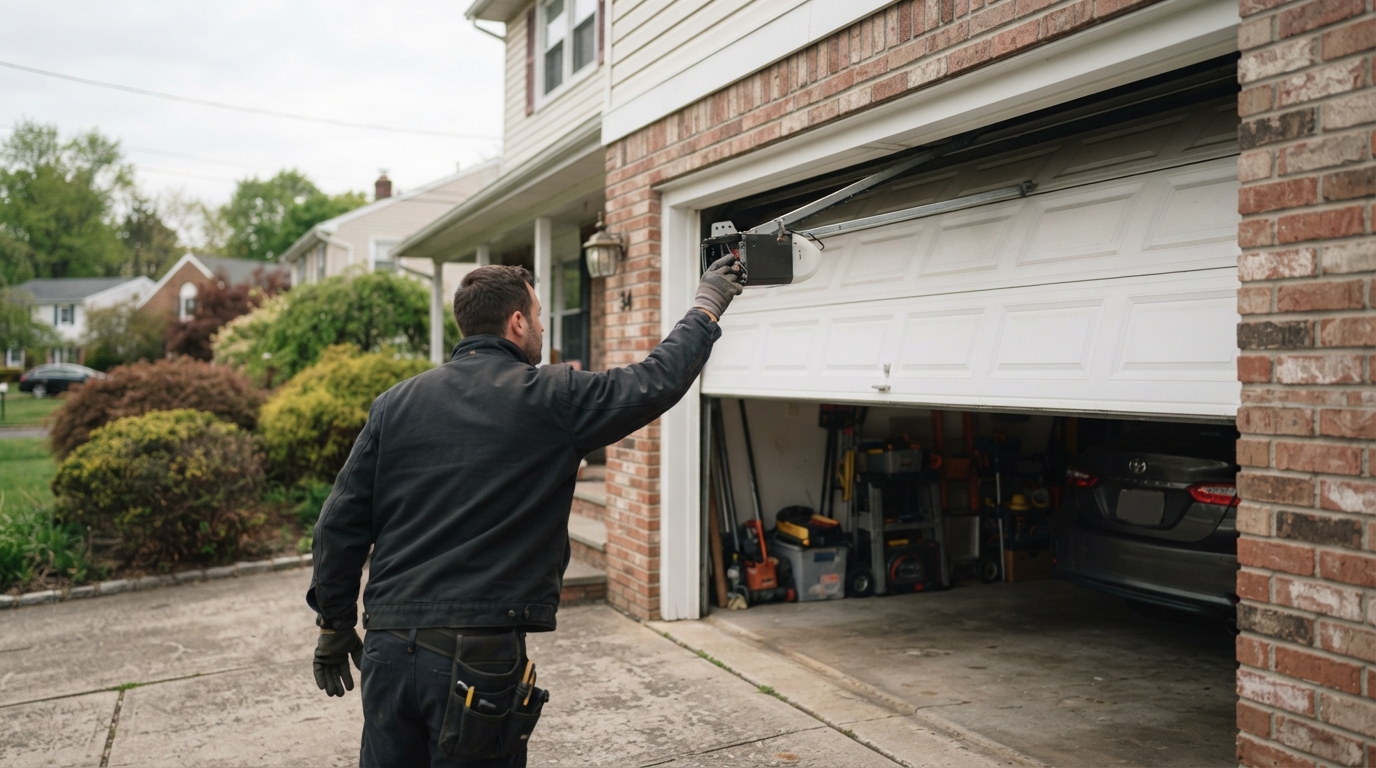
When a garage door opener stops working, the cause is usually one of a handful of well-known mechanical or electrical failures. Knowing what to look for helps you decide whether a quick fix will do or whether you need a technician.
If you are dealing with a stubborn or recurring issue, scheduling garage door opener repair with a qualified local technician is the fastest path to a safe, lasting fix.
- Most Common Garage Door Opener Failures
Garage door opener issues tend to be less dramatic than a broken spring but are equally frustrating. When an opener starts making unusual noises or the door reverses before hitting the ground, something is wrong internally. Problems range from worn gears to faulty circuit boards.
Here are the failures homeowners in Old Bridge encounter most often:
- No response at all. If the opener produces no sound and no movement, the problem could be as simple as a disconnected power source. Check that the opener is plugged in and that the outlet has power.
- Door reverses unexpectedly. A malfunctioning opener may cause the door to not respond to the remote, reverse unexpectedly, or fail to open or close completely.
- Misaligned or dirty safety sensors. If the door starts to close but immediately reverses, or the opener light blinks unexpectedly, the photo-eye sensors near the floor may be out of alignment or obstructed.
- Grinding or squeaking noises. Grinding or squeaking noises often indicate worn gears or a lack of lubrication inside the drive system.
- Remote control problems. If the remote is not working, it may need new batteries or reprogramming.
- Motor runs but door stays put. When the motor runs but the door does not move, the issue may involve stripped internal gears, a broken trolley, or a disengaged drive system. Repeated failures usually indicate internal wear requiring professional repair or replacement.
Repair vs. Replace: A Quick Comparison
Not every opener problem calls for a full replacement. The table below outlines common scenarios and the typical recommended action.
| Symptom | Likely Cause | Recommended Action |
|---|---|---|
| No power, no movement | Unplugged unit or tripped breaker | DIY check; call tech if outlet is fine |
| Door reverses mid-close | Dirty or misaligned sensors | Clean and realign sensors; call tech if persists |
| Grinding noise during operation | Worn drive gears or loose chain/belt | Lubricate or tighten; professional gear replacement if worn |
| Logic board errors or random operation | Random operation, flashing diagnostic lights, or a completely unresponsive opener often point to logic board or wiring issues. | Professional repair or replacement required |
| Opener over 15 years old, frequent failures | General age-related wear | Consider full opener replacement |
- Safety Considerations You Should Not Ignore
Opener problems are not just an inconvenience. A malfunctioning garage door opener is more than an inconvenience — it can impact your home’s safety, security, and daily routine.
The U.S. Consumer Product Safety Commission (CPSC) sets mandatory entrapment-protection standards for all residential openers. According to the CPSC garage door operator safety standard, all garage door openers manufactured or imported for sale in the United States after January 1, 1991 must have reversing systems, and a requirement for an external entrapment protection system was added in 1993. This system can be an electric eye, a door-edge sensor, or any equivalent device, and if an electric eye is used, it should be installed at a height of four to six inches above the floor.
If your opener predates these standards or its safety features are no longer functioning correctly, replacement is the safer and more practical choice. One wrong move — like accidentally disconnecting a safety sensor or misadjusting the force settings — could turn your garage door into a hazard.
- When to Call a Local Opener Repair Professional
Some opener symptoms are safe to troubleshoot yourself, but others should go straight to a technician. Stop DIY attempts and call a pro when:
- The door suddenly feels heavier than usual, moves unevenly, or slams shut — these are signs of broken springs, frayed cables, or balance issues, and continuing to use the opener in this condition can burn out the motor or cause the door to fall unexpectedly.
- The opener shows random operation, flashing diagnostic lights, or is completely unresponsive — these point to logic board or wiring issues that are not DIY-friendly and can worsen if improperly handled.
- Some opener issues are actually symptoms of more serious mechanical problems. Professional technicians bring diagnostic tools and expertise that can spot the difference between a minor hiccup and a major malfunction.
FAQ: Garage Door Opener Repair in Old Bridge
How long does a garage door opener typically last? Most residential openers last 10 to 15 years with regular maintenance. Frequent repairs, loud operation, or missing modern safety features are signals that replacement makes more sense than another fix.
Can I repair the opener myself? While some minor issues can be resolved with simple troubleshooting, persistent or serious problems deserve expert attention. Power checks, sensor cleaning, and remote reprogramming are reasonable DIY steps. Gear replacement, wiring, and logic board issues should be handled by a trained technician.
Does a faulty opener always mean the opener itself is broken? Sometimes the garage door opener may be fine, but broken springs are the actual problem. In those cases, the door itself cannot lift. A technician can isolate whether the fault is in the opener or in the mechanical components of the door.
What opener types are available for replacement? The motor powers a chain, belt, or screw drive that moves the door up or down along its tracks. Chain drives are the most affordable; belt drives run quieter; screw drives require less maintenance. A technician can recommend the right type based on your door weight and garage layout.
- Get Opener Repair Service in Old Bridge
Armor Overhead Door, based in Hazlet, New Jersey, specializes in residential and commercial garage door installation and repair. Their experienced technicians handle any type of garage door repair service or new installation, serving Monmouth County, Union County, Morris County and Ocean County.
Armor Overhead Door offers opener repair and installation for both residential and commercial properties. Whether you need a sensor realigned, a drive system replaced, or a full opener upgrade, reaching out to a local specialist ensures the work meets current safety standards and gets done right the first time. Click Here for more information about their garage door opener repair services.