Keeping Your Workplace Lush With Expert Office Plant Maintenance
Essentially:
Regular office plant service includes watering, pruning, pest checks, and seasonal rotation to keep interior greenery healthy year-round.
Professional maintenance schedules reduce the risk of plant decline caused by inconsistent light, humidity, and watering in commercial spaces.
Businesses in Jersey City, NJ can access scheduled plant care support from a provider based in Berkeley Heights, NJ.
Interior greenery in a commercial setting requires more than an occasional watering can and a sunny windowsill. Consistent Office Plant Service addresses the specific challenges of office environments, including fluctuating HVAC airflow, limited natural light, and weekend neglect, all of which can quickly stress plants that would otherwise thrive outdoors. A structured maintenance plan accounts for these variables through scheduled visits rather than reactive fixes.
Office environments differ from homes or retail spaces in ways that directly affect plant health. Recognizing these differences helps explain why a maintenance routine matters more than a one-time installation.
Why Office Conditions Challenge Plant Health
Commercial buildings present a unique set of stressors that home gardeners rarely encounter.
Artificial lighting cycles : Fluorescent or LED lighting lacks the full spectrum plants need, which can slow growth or cause leggy stems over time.
Climate control swings : Centralized heating and cooling systems create dry air pockets that accelerate soil moisture loss.
Inconsistent watering : Employees are rarely trained to recognize early signs of under- or over-watering, leading to root stress.
Low humidity : Many commercial spaces sit below the humidity range most tropical interior plants prefer, according to general horticultural guidance from the U.S. Environmental Protection Agency , which notes indoor air often runs drier than outdoor conditions depending on building systems.
These factors compound over weeks and months, which is why a single watering schedule set at installation rarely holds up long term.
What a Maintenance Visit Typically Covers
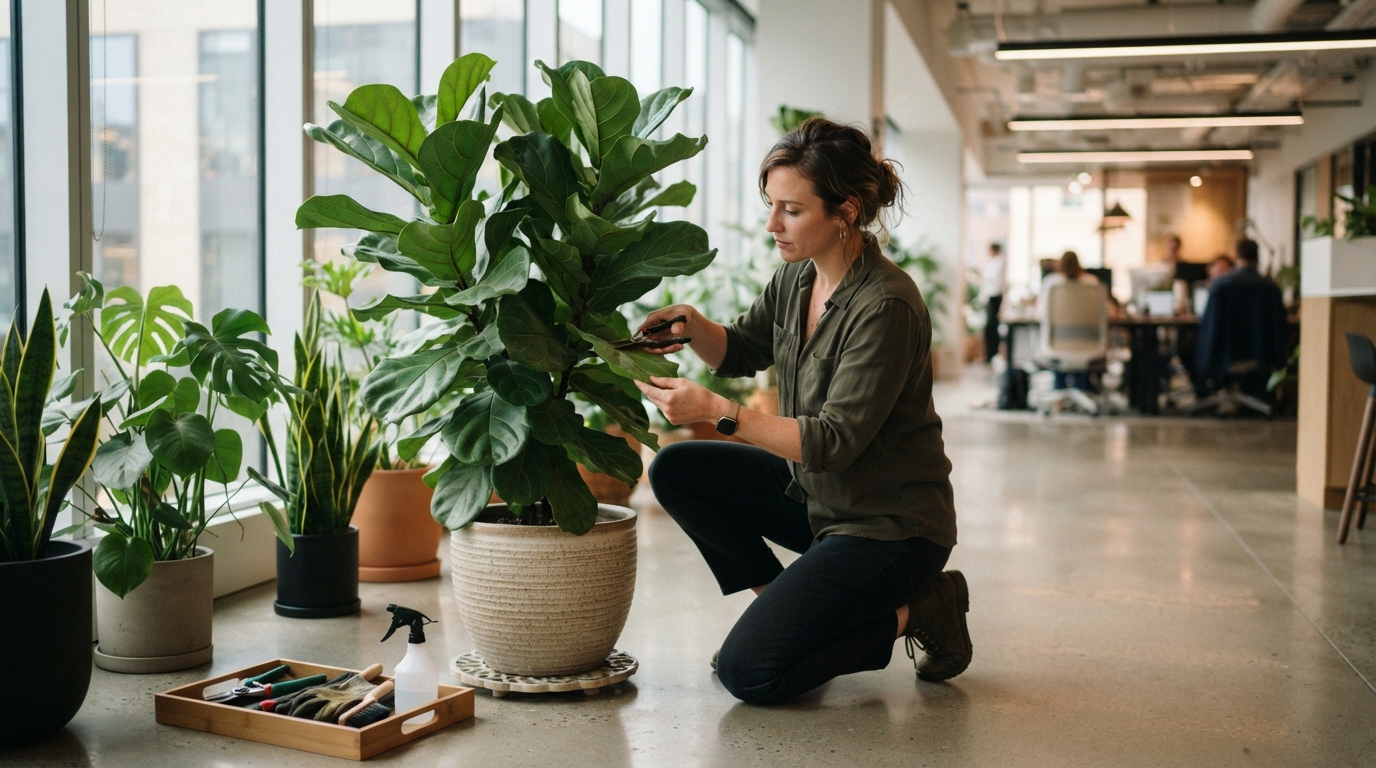
A standard service visit follows a repeatable checklist designed to catch problems before they affect plant appearance or health.
1. Soil moisture assessment to confirm watering intervals match current conditions.
2. Pruning and leaf cleaning to remove dead growth and dust buildup that can block light absorption.
3. Pest and disease inspection , checking the underside of leaves and soil surface for early signs of infestation.
4. Fertilization on a seasonal basis , adjusted for each plant species and its growth cycle.
5. Rotation or replacement of any plant that is declining beyond recovery, keeping the overall display consistent.
Technicians typically document each visit, which allows facility managers to track plant condition over time rather than relying on memory or guesswork.
Comparing Maintenance Approaches
Office managers generally choose between three levels of plant care oversight. The table below outlines the practical differences.
| Approach | Typical Frequency | Risk Level |
| In-house staff watering | Irregular, as time allows | High risk of over/under-watering |
| One-time installation only | No follow-up visits | High risk of decline within months |
| Scheduled professional service | Weekly or bi-weekly visits | Lower risk, consistent monitoring |
Scheduled service reduces the guesswork involved in matching watering and care routines to each plant’s specific needs, particularly in offices with a mix of species that have different light and moisture requirements.
Service Availability Across the Region
Based in Berkeley Heights, NJ, Visit Website At Shades Of Green extends plant care support to offices and commercial spaces throughout Jersey City, NJ, allowing businesses outside its home base to maintain interior greenery without managing the process internally. Facility managers in multi-tenant buildings or open office layouts often find that outsourcing this task frees staff time while keeping plant displays presentable for clients and employees alike.
Frequently Asked Questions
How often should office plants be serviced? Most commercial spaces benefit from a visit every one to two weeks, though frequency can vary based on plant density and lighting conditions.
Can struggling plants be revived instead of replaced? Many plants recover with adjusted watering, pruning, and light exposure, though severely root-bound or diseased plants may need replacement.
Do artificial plants eliminate the need for maintenance? Artificial plants still require periodic dusting and cleaning to maintain a professional appearance, though they do not need watering or pest checks.
What size offices typically use this type of service? Both small offices with a handful of plants and larger commercial floors with extensive greenery displays can follow a scheduled maintenance plan suited to their layout.
Business Info
Visit the Shades of Green Website to explore published location information and commercial plant care services available in the Berkeley Heights, NJ area.