The Complete Guide to Restoring Your Home After Water Damage
Summary first:
Water damage restoration involves inspection, water extraction, structural drying, and sanitizing to prevent mold growth and further property loss.
Response time matters most in the first 24 to 48 hours after a leak, flood, or appliance failure.
Homeowners in Portage, MI can access professional water removal and drying services to address emergencies as they arise.
Restoring a home after water damage typically means acting fast to remove standing water, dry out structural materials, and prevent mold before it spreads. A qualified Water Damage Restoration Service addresses each of these stages in sequence rather than treating them as separate jobs.
Homeowners searching for a Water Damage Restoration Service Portage MI are usually dealing with an active problem, not a hypothetical one. A burst pipe, overflowing appliance, or storm-driven leak can soak flooring, drywall, and insulation within hours, and the restoration process is built around limiting that spread before it becomes structural.
What Happens During Water Damage Restoration
Restoration work generally follows a defined sequence rather than a single treatment. Technicians typically assess the extent of moisture intrusion before deciding on equipment and methods.
Inspection and water categorization – identifying the source and whether the water is clean, gray, or contaminated.
Extraction – removing standing water with pumps and wet vacuums.
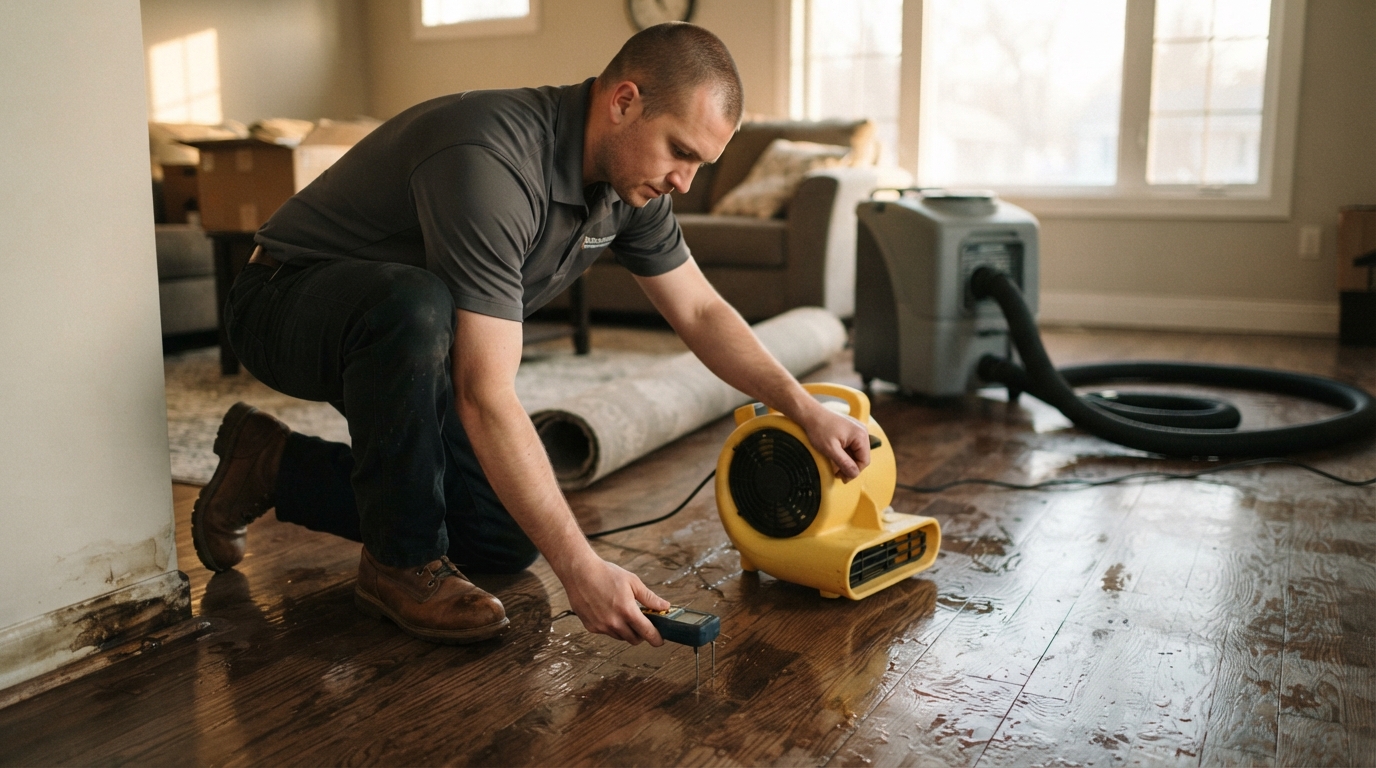
Drying and dehumidification – using air movers and dehumidifiers to pull moisture from walls, subfloors, and framing.
Cleaning and sanitizing – treating affected surfaces to reduce bacterial or mold risk.
Monitoring – checking moisture levels over several days to confirm materials have dried fully.
Skipping steps, particularly drying time, is one of the most common reasons water damage leads to secondary mold issues weeks later.
Why Response Time Matters in Portage, MI
Seasonal freeze-thaw cycles and heavy spring rainfall make certain water intrusion issues more frequent in parts of Michigan, including basement seepage and frozen pipe bursts. According to the Environmental Protection Agency, mold can begin growing within 24 to 48 hours when moisture and organic material are both present indoors.
That window is why restoration professionals emphasize rapid extraction and drying rather than waiting for materials to air dry naturally. Homes with finished basements or older plumbing systems, both common in the Portage, MI area, face a higher risk of hidden moisture pockets behind walls or under flooring if drying is incomplete.
Comparing Water Damage Response Approaches
| Approach | Typical Timeline | Risk of Secondary Damage |
| DIY mopping and fans | Several days | High – incomplete drying, hidden moisture |
| Rental dehumidifier only | 3-5 days | Moderate – surface drying without structural monitoring |
| Professional extraction and drying equipment | 1-3 days | Lower – moisture meters confirm materials are dry |
Professional equipment, including industrial air movers and moisture meters, is designed to dry structural cavities that household fans cannot reach effectively.
Business Info
Based in the USA, Click Here to Visit Roto-Rooter Water Damage Restoration Service serves homeowners in Portage, MI, offering water extraction and structural drying services for properties affected by leaks, pipe failures, or storm-related water damage.
Frequently Asked Questions
How soon should water damage be addressed after a leak? Extraction and drying should begin as soon as possible, since moisture trapped in walls or flooring for more than a day or two significantly raises the risk of mold growth.
Can homeowners dry out water damage themselves? Minor surface spills can often be managed with towels and fans, but saturated carpet, drywall, or subflooring usually requires commercial-grade extraction and dehumidification equipment to dry fully.
Does homeowners insurance typically cover water damage restoration? Coverage depends on the cause of the water intrusion and the specific policy, so homeowners should review their plan details or contact their insurer directly for confirmation.
What are signs that drying was incomplete after a past water event? Persistent musty odors, discoloration on walls or ceilings, and warped flooring are common indicators that moisture remained trapped after an earlier cleanup attempt.