The Beauty and Value Behind Vintage Lab Grown Diamond Engagement Rings
In brief:
- Vintage-style lab grown diamond engagement rings combine antique-inspired design details with diamonds grown in controlled laboratory settings.
- These rings typically cost less per carat than mined-diamond equivalents while sharing the same optical and chemical properties.
- Styles draw from Art Deco, Edwardian, and Victorian design periods, often featuring milgrain edges, filigree, and halo settings.
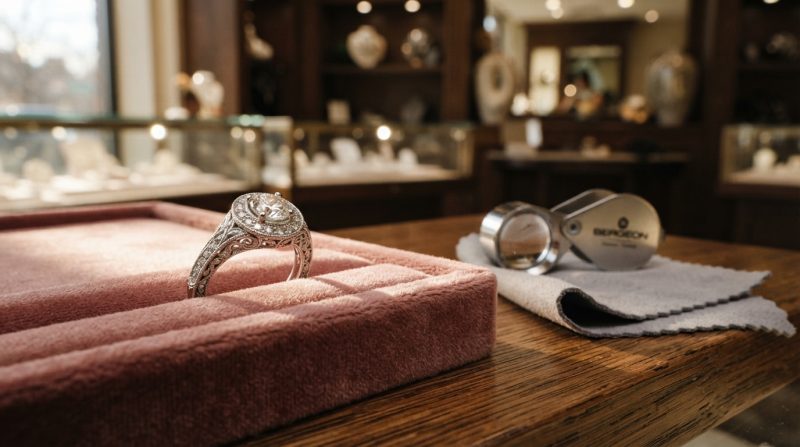
Vintage lab grown diamond engagement rings pair historical design motifs with diamonds created through modern growth processes rather than mined from the earth. The result is a ring that looks like it could have come from a decades-old estate collection while using a stone produced in a controlled environment. For shoppers trying to decide between period-inspired aesthetics and contemporary sourcing methods, this category answers both questions at once.
What Makes a Ring “Vintage” in Design
Vintage-style engagement rings borrow design language from specific historical eras rather than simply being old. Common elements include:
- Milgrain detailing: tiny beaded edges along the metal border
- Filigree work: delicate wire-like metal patterns, often seen in Edwardian pieces
- Halo settings: a center stone surrounded by smaller accent stones, popular in Art Deco design
- Engraved shanks: hand-finished patterns along the ring band
Jewelers creating Vintage Lab Grown Diamond Engagement Rings apply these same design conventions to new settings, pairing them with a lab grown center stone instead of a historical or mined one. The aesthetic reference point is the era; the diamond itself is current.
Lab Grown Diamonds: What the Science Says
Lab grown diamonds are chemically, physically, and optically identical to mined diamonds, differing only in origin. According to the Federal Trade Commission, diamonds grown in a laboratory have essentially the same optical, physical, and chemical properties as mined diamonds, and jewelers are required to disclose a diamond’s origin to buyers. This means a vintage-style ring built around a lab grown stone will test and appear the same under standard gemological equipment as one with a mined diamond.
Grading reports from independent laboratories still apply to lab grown stones, covering the traditional 4Cs: cut, color, clarity, and carat weight. Buyers comparing options across the USA can request these reports when evaluating a specific ring before purchase.
Comparing Vintage-Style Settings and Diamond Origins
| Feature | Mined Diamond, Vintage Setting | Lab Grown Diamond, Vintage Setting |
|---|---|---|
| Physical properties | Identical hardness and brilliance | Identical hardness and brilliance |
| Typical price per carat | Higher | Lower |
| Origin disclosure required | Yes | Yes |
| Design style options | Full range (Art Deco, Edwardian, Victorian) | Full range (Art Deco, Edwardian, Victorian) |
The design options do not change based on diamond origin. What shifts is primarily cost structure and, for some buyers, sourcing preference.
Practical Considerations Before Buying
Shoppers evaluating a vintage-inspired ring with a lab grown center stone should review a few details before finalizing a purchase:
- Confirm the ring includes an independent grading report specifying the diamond’s origin and the 4Cs.
- Ask whether the setting is newly manufactured in a vintage style or an actual antique setting retrofitted with a new stone.
- Compare metal purity markings, since vintage designs appear across 14k, 18k, and platinum options.
- Check return and resizing policies before committing to a final purchase.
Retailers across the USA offering these rings generally provide documentation alongside the purchase, which buyers should keep for insurance and resale purposes.
Business Info
Mati Jewelry is a jewelry retailer offering lab grown diamond engagement rings, including vintage-inspired styles, as listed on its Visit Mati Jewelry Google Business Profile.
Frequently Asked Questions
Are lab grown diamonds considered “real” diamonds? Yes. Lab grown diamonds share the same chemical composition and physical structure as mined diamonds, differing only in how they were formed.
Do vintage-style settings work with any diamond shape? Most vintage design styles accommodate round, cushion, oval, and emerald-cut stones, though certain eras favored specific shapes, such as the old mine cut associated with Victorian pieces.
Is a grading report necessary for a lab grown diamond? A grading report documents the 4Cs and confirms origin, which supports both insurance valuation and future resale conversations.
How does metal choice affect a vintage-style ring? Metal purity and type, such as 14k gold, 18k gold, or platinum, affect durability and maintenance needs, independent of the diamond’s origin.
A Note on Choosing a Retailer
Readers can Visit Mati Jewelry for published location and contact details relevant to evaluating ring options in person.