Choosing the Right Auto Body Shop for Quality Repairs
Short answer:
- A qualified auto body shop repairs collision damage, dents, frame misalignment, and paint finish while coordinating with insurance providers.
- Look for documented repair processes, OEM parts usage, and clear communication about repair timelines before selecting a shop.
- Confirm services match the damage type, since some shops handle only collision-related repairs rather than general mechanical maintenance.
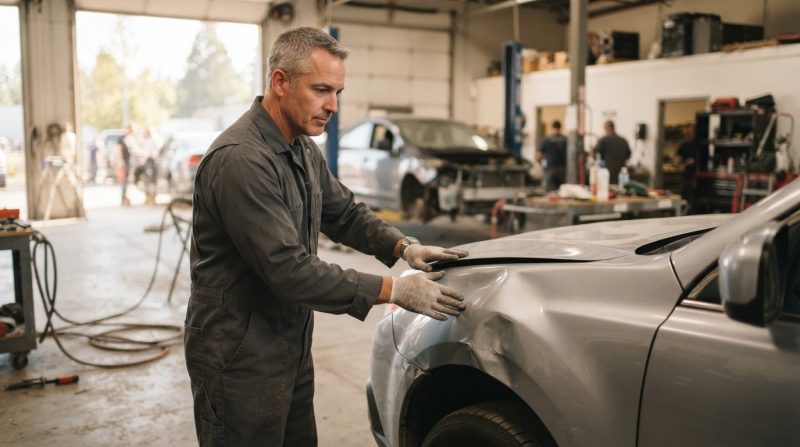
Vehicle collisions, hailstorms, and parking lot mishaps leave drivers searching for repair options under pressure, often with little time to compare providers. Selecting the right Auto Body Shop involves more than proximity. It requires checking whether a facility handles the specific type of damage involved, uses manufacturer-approved parts, and maintains transparent repair timelines.
Collision damage ranges from minor cosmetic dents to structural frame issues that affect vehicle safety. A shop’s ability to address both extremes, along with secondary damage like cracked windshields, often determines how completely a vehicle returns to pre-accident condition.
What a Collision Repair Facility Typically Handles
Auto body shops that focus on collision repair generally separate their work into a few core categories. Reviewing these categories helps vehicle owners match their specific damage to a shop’s documented capabilities.
- Auto body repair and dent removal for panel damage
- Frame straightening for structural misalignment after impact
- Hail damage repair for widespread cosmetic dents
- Paint matching and refinishing to restore factory appearance
- Windshield repair and replacement, including mobile service options
Some facilities limit their scope to collision-related work and do not perform general automotive maintenance such as oil changes or routine tune-ups. Confirming this distinction before scheduling an appointment prevents wasted trips, since mechanical issues unrelated to a collision may require a separate repair provider.
Evaluating Repair Quality and Process Transparency
Repair quality depends heavily on parts sourcing and process documentation. Shops that use original equipment manufacturer (OEM) parts generally restore a vehicle closer to its factory specifications than those relying solely on aftermarket components.
A transparent repair plan should outline these steps:
- Initial damage assessment and photo documentation
- Written estimate covering parts, labor, and expected timeline
- Insurance claim coordination, when applicable
- Panel repair, replacement, or frame correction as needed
- Paint matching and final quality inspection
According to the National Highway Traffic Safety Administration, vehicle safety systems depend on proper structural repair after a collision, making frame alignment accuracy a critical factor rather than a cosmetic one. Shops that skip documented inspection steps risk leaving hidden structural or sensor-related issues unresolved.
Comparing Repair Options by Damage Type
| Damage Type | Typical Repair Approach | Key Consideration |
|---|---|---|
| Minor dents and dings | Paintless dent repair or panel refinishing | Confirm panel can be repaired without full replacement |
| Hail damage | Multi-panel dent repair, possible repainting | Check for mobile or in-shop repair options |
| Frame misalignment | Frame straightening with measurement verification | Request post-repair alignment documentation |
| Cracked or chipped windshield | Windshield repair or replacement | Ask whether mobile service is available |
This comparison illustrates why matching damage type to shop capability matters more than selecting the nearest location. A facility equipped for hail damage repair, for example, may not be the best fit for extensive frame work without proper measurement tools.
Local Considerations for Phoenix Drivers
Vehicle owners in Phoenix, AZ face a specific combination of intense summer heat and seasonal dust storms, both of which affect paint durability and panel wear over time. These conditions make paint matching and UV-resistant refinishing particularly relevant when comparing repair quality among local options. Based in USA, Dynasty Collision Repair serves customers across Phoenix, AZ with collision-related repair services. Vehicle owners evaluating repair facilities in this region should ask specifically how a shop addresses heat-related paint curing and dust exposure during the repair process, since these factors can influence finish longevity.
Frequently Asked Questions
Does an auto body shop handle both insurance claims and direct payment repairs? Many collision repair facilities coordinate directly with insurance providers while also accepting direct payment for repairs outside a claim, though policies vary by shop.
How is frame straightening different from panel repair? Frame straightening corrects structural misalignment affecting the vehicle’s underlying support system, while panel repair addresses surface-level dents and cosmetic damage without altering the frame.
Can a shop repair hail damage without repainting the entire vehicle? In many cases, hail damage repair uses paintless dent repair techniques that avoid repainting unless the clear coat or paint layer has been compromised.
Is mobile windshield repair available for all crack types? Mobile repair typically works for smaller chips and cracks, while larger or more complex windshield damage often requires in-shop replacement.
Business Info
Dynasty Collision operates as a collision repair center handling auto body and related services. Additional details about hours, location, and current service listings are available on its Google Business Profile.
Next Steps for Comparing Repair Providers
Current listing information for Dynasty Collision Repair is published online for drivers reviewing repair options in the area. Readers can use this comparison framework to evaluate any collision repair facility against their specific vehicle damage before scheduling an estimate.