A Practical Guide to Planning Custom Countertops
Quick summary:
- Custom countertops are fabricated to fit your exact kitchen or bathroom layout using stone slabs cut, edged, and polished for your space.
- Material choice, edge profile, and slab availability are the three biggest factors that affect timeline and cost.
- Measuring, template verification, and professional installation reduce the risk of seams, chips, or uneven surfaces.
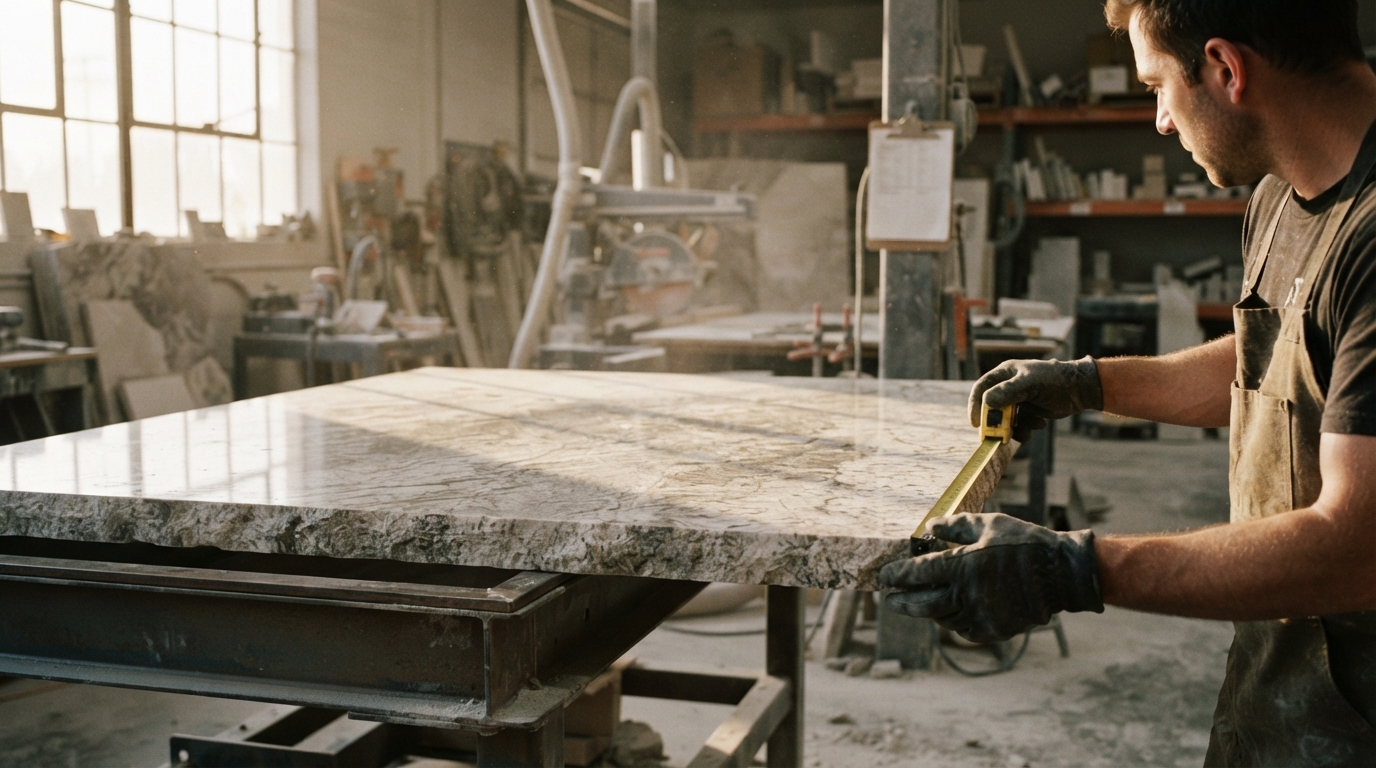
Custom countertops are surfaces cut and finished from natural or engineered stone to match the precise dimensions of a kitchen or bathroom, rather than purchased as a pre-cut standard size. Homeowners typically choose this route when they want a specific material, edge style, or layout that off-the-shelf options cannot accommodate.
Finding reliable Custom Countertops in Great Falls, MT starts with understanding how the fabrication process works and what to expect at each stage, from material selection through final installation. This guide walks through the practical steps so you can plan a renovation with fewer surprises.
How Custom Countertop Fabrication Works
The process generally follows a predictable sequence, regardless of the material selected.
- Initial consultation and material selection. You review slab options such as granite, quartz, or marble, often viewing the actual slab rather than a sample chip.
- Precise measuring and templating. A fabricator measures the cabinet layout, often using digital templating tools to capture exact angles and curves.
- Cutting and edge detailing. The slab is cut to size, sink and cooktop cutouts are made, and edges are shaped into the chosen profile.
- Polishing and sealing. Natural stone surfaces are typically sealed to resist staining, while engineered materials may not require sealing at all.
- Delivery and installation. Finished pieces are transported and set into place, with seams joined and leveled before final inspection.
Each stage affects the final look and durability, so skipping steps like templating can lead to gaps or misaligned seams.
Why Templating Matters
Templating is the step most likely to be rushed, yet it has the biggest impact on fit. A fabricator who measures after cabinets are installed, rather than relying on blueprint estimates, accounts for real-world variations in wall squareness and cabinet leveling. According to the National Kitchen and Bath Association, accurate measurement and planning at the design stage is one of the most common factors that determines whether a kitchen renovation stays on schedule. Skipping this step is one of the most common reasons custom counters need rework after installation.
Choosing a Material That Fits Your Space
Material selection affects appearance, maintenance, and long-term durability. The table below compares common options at a glance.
| Material | Maintenance | Heat Resistance | Best For |
| Granite | Periodic sealing needed | High | Natural variation, classic look |
| Quartz | Low maintenance, non-porous | Moderate | Consistent pattern, busy kitchens |
| Marble | Sealing required, prone to etching | Moderate | Bathrooms, lower-traffic surfaces |
| Butcher Block | Oil and reseal regularly | Low | Warm, traditional aesthetic |
Granite and quartz remain the two most requested materials for kitchen counters because they balance appearance with daily durability. Marble is more often selected for bathroom vanities or accent areas where heavy use and heat exposure are less of a concern.
Measuring, Layout, and Edge Profile Decisions
Before fabrication begins, a few layout decisions shape both cost and function.
- Seam placement. Larger kitchens may require seams between slab pieces; a fabricator can often position these in less visible areas.
- Edge profile. Options range from a simple straight edge to a rounded bullnose or layered ogee, each affecting both cost and cleaning ease.
- Overhang length. Counters extending over seating areas need additional support to prevent cracking under weight.
- Sink and cooktop cutouts. These require precise placement during templating to avoid costly adjustments later.
Walking through these decisions with a fabricator before cutting begins helps avoid change orders mid-project.
What to Expect During Installation Day
Installation is typically completed in a single day once slabs are fabricated, though older cabinetry may need minor adjustments first.
- Existing countertops are removed and disposed of, unless reused elsewhere in the home.
- New pieces are carried in and test-fit before any adhesive is applied.
- Seams are joined, leveled, and polished smooth.
- Sinks, faucets, and cooktops are reconnected, and the surface is cleaned for final inspection.
Homeowners should confirm in advance whether plumbing reconnection is included or handled by a separate contractor, since this varies by project scope.
Frequently Asked Questions
How long does custom countertop fabrication usually take? Timelines vary based on material availability and slab sourcing, but templating, cutting, and installation together typically span one to three weeks from final measurement to install day.
Can I see the actual slab before it is cut? Most fabricators allow clients to view and select the specific slab, since natural stone varies in veining and color even within the same material type.
Do engineered and natural stone require different care? Yes. Natural stone like granite or marble generally needs periodic sealing, while engineered quartz is non-porous and typically needs only routine cleaning.
What happens if my cabinets are not perfectly level? A fabricator or installer can often shim or adjust the base during installation, which is why accurate on-site templating after cabinet installation is preferred over estimates from a floor plan.
Planning ahead for material choice, templating, and edge details helps ensure a custom countertop project goes smoothly from consultation to final polish. For homeowners in the area exploring options locally, Silver City Stone provides fabrication and installation services for kitchen and bathroom countertop projects in Great Falls, Montana.