A Homeowner’s Guide to Stylish, Energy-Efficient Window Shades
Essentially:
- Window shades reduce indoor heat gain and glare while giving Tempe homeowners more control over light and privacy.
- Material, mount type, and opacity level all affect energy performance and should be matched to each room’s sun exposure.
- Professional measuring and installation help shades fit tightly against the window frame, which matters most for heat control in desert climates.
Homeowners searching for window shades for windows in Chandler, AZ are usually trying to solve one of two problems: a room that gets too hot and bright in the afternoon, or windows that feel exposed after dark. The right shade style addresses both, and in a desert climate the material choice matters as much as the look.
Finding reliable Window Shades For Windows in Chandler, AZ starts with understanding how shades perform differently from blinds or drapes in intense Southwest sun. Fabric density, cell structure, and how close the shade sits to the glass all influence how much heat and UV light actually get blocked. A shade that looks right in a showroom can still underperform if it is not sized and mounted correctly for a specific window.
Why Shade Material Matters in Desert Heat
Arizona’s long cooling season puts real pressure on window treatments to do more than decorate a room. Shades act as a buffer layer between hot glass and living space, and the material used determines how much of that heat actually transfers indoors.
- Cellular (honeycomb) shades trap air in pocketed cells, adding insulation value against both summer heat and winter heat loss.
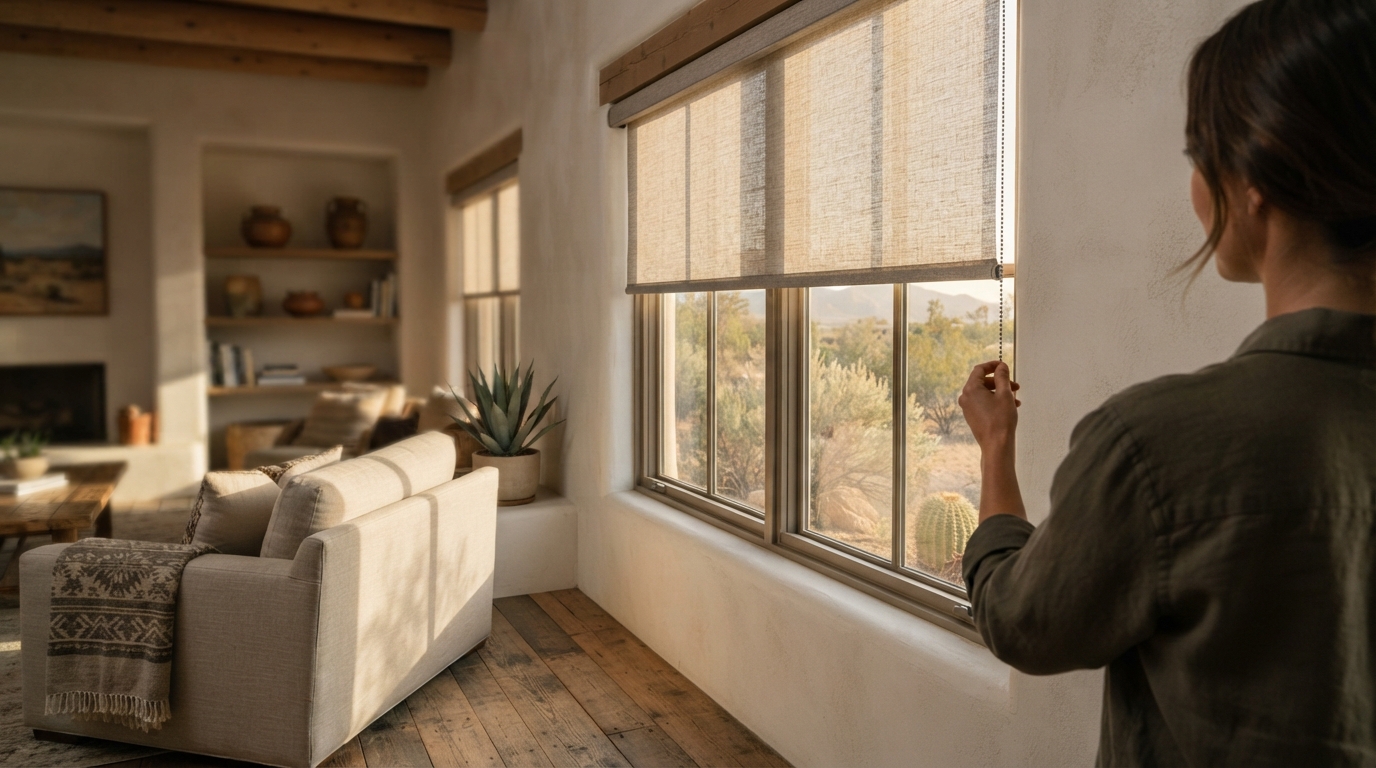
- Solar shades use a tightly woven screen fabric that blocks glare and UV rays while still allowing some outward visibility.
- Roller shades offer a cleaner, more minimal look and come in varying opacity levels from sheer to blackout.
According to the U.S. Department of Energy, window treatments including cellular shades can reduce heat gain and heat loss through windows, with some products cutting summer heat gain by a significant margin when properly installed. In a climate where cooling costs dominate utility bills for much of the year, that performance difference is not cosmetic. It shows up on monthly energy statements.
Matching Shade Style to Room Function
Not every room needs the same shade. A home office that doubles as a video-call space has different glare concerns than a west-facing bedroom that needs to stay dark and cool into the evening.
| Room Type | Common Challenge | Shade Style to Consider |
| Living room / family room | Glare on TV screens, fading furniture | Solar shades with mid-range opacity |
| Bedrooms | Light control for sleep, privacy at night | Room-darkening or blackout roller shades |
| Kitchen | Moisture, frequent light adjustments | Light-filtering roller or cellular shades |
| Home office | Screen glare, daytime privacy | Solar shades with low openness factor |
Opacity level is worth discussing room by room rather than choosing one style for the whole house. A shade that works well in a south-facing kitchen may feel too dim or too bright in a north-facing bedroom.
Mounting, Fit, and Why Measuring Precision Matters
Even a high-quality shade underperforms if it is mounted with gaps around the frame. Inside-mount shades sit within the window casing for a cleaner look, while outside-mount shades cover more of the wall and can block more light and heat around the edges.
- Inside mount works best when the window frame is deep enough and perfectly square.
- Outside mount helps when a frame is uneven or when maximum light and heat blockage is the priority.
- Precise width and depth measurements prevent light gaps that undercut a shade’s insulating benefit.
Local installers who regularly work on Southwest homes understand how stucco frames, varying window depths, and older construction can affect fit in ways a generic online measurement guide does not anticipate.
Frequently Asked Questions
Do window shades actually lower cooling costs in Arizona? Shades with insulating or reflective properties can meaningfully reduce solar heat gain, which is one of the larger contributors to cooling load in homes with significant window exposure, according to Department of Energy guidance on window treatments.
What is the difference between solar shades and blackout shades? Solar shades filter light and reduce glare while preserving some outside view, while blackout shades use a denser or lined fabric to block nearly all incoming light, making them better suited to bedrooms than living areas.
How do I know if I need inside mount or outside mount shades? Inside mount suits deep, square frames and gives a built-in look, while outside mount is often chosen for uneven frames or when extra coverage against light and heat is the goal.
Can shades help with both privacy and energy efficiency at the same time? Yes. Many shade fabrics are designed to filter or block light for privacy while also reducing the heat and UV transfer through the glass, so homeowners do not have to choose one benefit over the other.
Choosing the Right Shades for Your Home
Picking window shades is less about trend and more about matching fabric, opacity, and mount type to how each room is actually used throughout the day. A careful room-by-room assessment, paired with accurate measurements, tends to produce better long-term comfort and energy results than a single blanket choice for the whole house. For homeowners in the Chandler and Tempe area who want shades measured and installed by people familiar with local window types, Arizona Shutter Company offers in-home consultation to help match the right product to each window.