Essential Home Waterproofing Solutions for Properties
Quick take:
- Home waterproofing in Atlanta GA typically starts with grading, drainage, and foundation sealing to keep groundwater and heavy rainfall out of basements and crawl spaces.
- Georgia’s clay-heavy soil and seasonal storms make exterior drainage systems and sump pumps common long-term fixes.
- A professional inspection helps identify whether water is entering through foundation cracks, poor grading, or inadequate drainage before any repair work begins.
Atlanta homeowners deal with a specific combination of problems: dense clay soil that holds water, heavy spring and summer downpours, and older housing stock with aging foundations. These conditions make basement and crawl space moisture one of the most common property issues in the metro area.
Addressing it properly means understanding which method fits the water source. Home Waterproofing in Atlanta Ga generally falls into two categories: exterior solutions that stop water before it reaches the foundation, and interior systems that manage water that has already entered. Choosing the right approach depends on the home’s grading, foundation type, and how water is actually moving through the soil.
How Atlanta Soil and Climate Affect Foundations
Georgia’s red clay expands when saturated and contracts when dry, a cycle that puts repeated pressure on foundation walls. According to the USDA Natural Resources Conservation Service, clay-dominant soils have low permeability, which slows drainage and increases the chance that water pools near a foundation instead of dispersing away from it. Combined with Atlanta’s intense seasonal rainfall, this creates conditions where even small grading or gutter issues can lead to water intrusion over time.
Homes built on slopes or in low-lying lots face added risk because runoff naturally collects at the base of the structure. Older homes with original clay tile drain systems are also more prone to blockages and deterioration, since these systems were not designed for today’s rainfall patterns.
Core Waterproofing Methods for Atlanta Homes
Most effective waterproofing strategies combine more than one method rather than relying on a single fix.
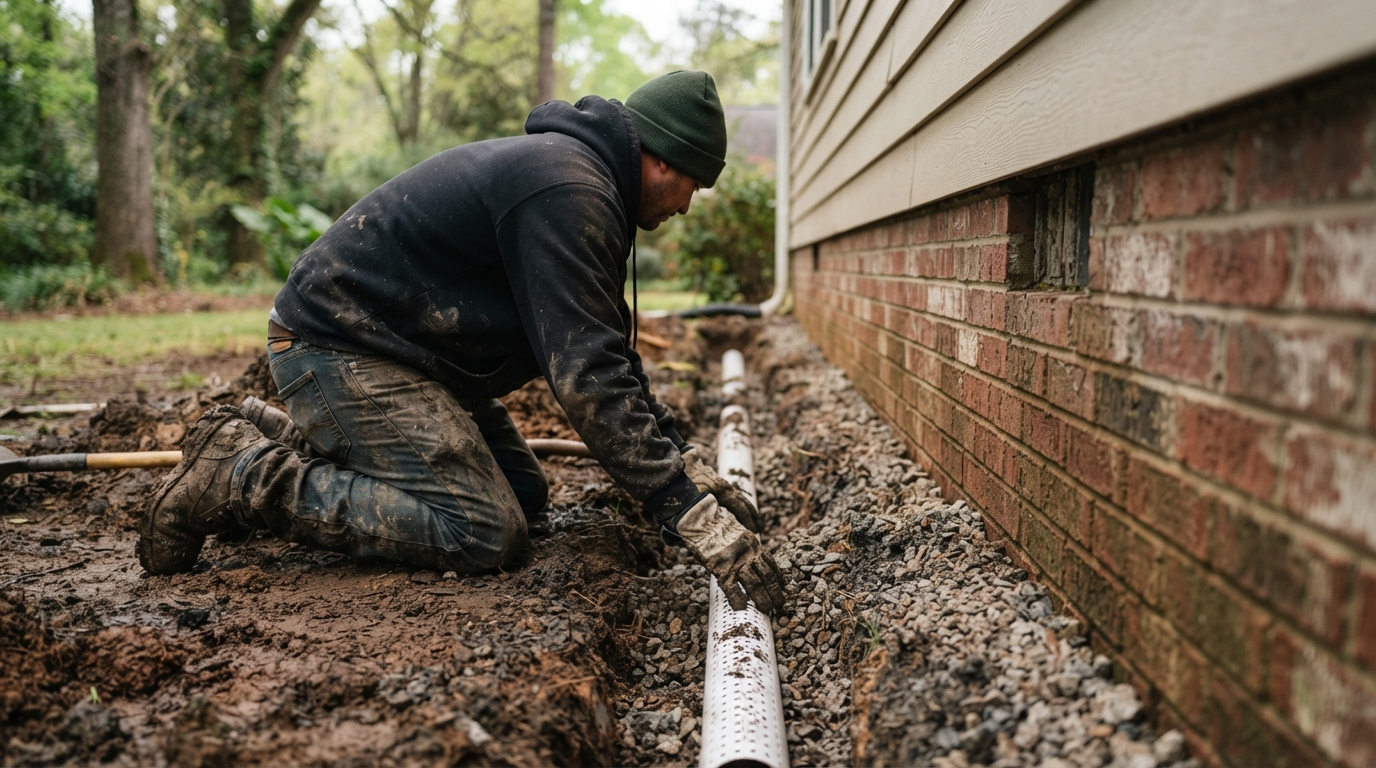
- Exterior grading and drainage correction redirects surface water away from the foundation using sloped soil, French drains, or buried downspout extensions.
- Foundation crack sealing closes active entry points in poured concrete or block walls using epoxy or polyurethane injections.
- Interior drainage systems collect water that bypasses exterior defenses and channel it to a sump pump for removal.
- Sump pump installation provides a mechanical backup for homes in low-lying areas or with a history of flooding.
- Vapor barriers in crawl spaces reduce humidity and prevent ground moisture from reaching wood framing and insulation.
Each method addresses a different stage of water movement, from the yard to the foundation wall to the interior floor.
Exterior vs. Interior Approaches
| Feature | Exterior Waterproofing | Interior Waterproofing |
|---|---|---|
| Primary goal | Stop water before it reaches the foundation | Manage water that has already entered |
| Typical methods | Grading, French drains, exterior sealants | Interior drain tile, sump pumps, vapor barriers |
| Best suited for | New construction or full foundation excavation | Existing homes where excavation is impractical |
| Maintenance needs | Periodic drain and gutter checks | Sump pump testing and battery backup checks |
Exterior work is often more disruptive but addresses the root cause, while interior systems are faster to install and useful when excavation around an existing structure is not feasible.
Signs an Atlanta Home Needs Waterproofing
Recognizing early warning signs helps prevent small issues from becoming structural problems.
- Musty odors or visible mold in basements and crawl spaces.
- Efflorescence, the white chalky mineral deposit left behind as water evaporates from concrete.
- Hairline cracks in foundation walls that widen after heavy rain.
- Standing water or damp soil near the foundation more than 24 hours after a storm.
- Peeling paint or bowing walls in below-grade spaces.
Any one of these signs warrants a closer look, since moisture problems tend to compound if left unaddressed through multiple wet seasons.
Planning a Waterproofing Project
A sound waterproofing plan starts with identifying the water source, not just the symptom. A contractor should evaluate grading, gutter performance, soil composition, and the condition of existing drainage before recommending a specific repair. Homeowners should also ask about warranty terms, since foundation and drainage work is meant to perform over many years of seasonal freeze-thaw and wet-dry cycles.
Sundry Waterproofing, a residential waterproofing company serving the Atlanta area, is listed on Google Business Profile with services covering foundation and basement waterproofing work. Homeowners evaluating options can use the profile to review service details and location information before scheduling an inspection.
Frequently Asked Questions
What causes basement water problems in Atlanta homes? Clay soil, heavy seasonal rainfall, and improper grading are the most common contributors, often combined with aging or undersized drainage systems.
Is exterior or interior waterproofing better? Exterior methods address the root cause but require excavation, while interior systems are less invasive and better suited for existing finished spaces.
How do I know if my foundation cracks are serious? Cracks that widen, run diagonally, or appear alongside bowing walls typically indicate a structural issue that needs professional evaluation rather than a cosmetic patch.
Does a sump pump need regular maintenance? Yes, sump pumps should be tested seasonally and equipped with a battery backup to maintain function during power outages from storms.
Understanding how Atlanta’s soil, rainfall, and home construction interact is the first step toward a lasting waterproofing solution. Homeowners who address drainage and foundation issues early typically avoid the more costly structural repairs that come with prolonged water exposure.