The Role of Professional Fire Damage Restoration in Recovery
Summary:
Professional fire damage restoration addresses structural repair, smoke and soot removal, and odor control after a home or business fire.
Response speed and documented process steps affect insurance claims and how fully a property returns to pre-loss condition.
Parkside Restoration, based in Bolingbrook, IL, supports recovery efforts for properties across Hinsdale, IL.
Fire damage restoration refers to the structured process of cleaning, repairing, and rebuilding a property after a fire, covering everything from soot removal to structural repair. It matters because the speed and method of that response often determine whether smoke odor, water damage from firefighting efforts, and structural weakening become permanent problems. Learn more about fire damage restoration from Parkside Restoration.
A fire leaves behind more than charred materials. Smoke particles settle into drywall, insulation, and fabric, while water used to extinguish flames can soak subfloors and framing within hours. Fire damage restoration typically begins with an assessment of these combined effects before any cleanup starts, since treating soot without addressing moisture can trap odors permanently.
What Happens During the Restoration Process
A fire-damaged property usually moves through several distinct phases before it is considered restored.
Inspection and damage assessment – technicians document the extent of fire, smoke, and water damage for both repair planning and insurance records.
Board-up and securing – broken windows, damaged roofing, or compromised walls are covered to prevent weather intrusion and unauthorized entry.
Water removal – standing water from firefighting efforts is extracted before mold or additional structural decay can set in.
Soot and smoke removal – surfaces, ductwork, and belongings are cleaned using methods suited to the type of residue left behind.
Odor treatment – lingering smoke smell is addressed through specialized deodorizing techniques rather than surface masking.
Structural repair – framing, drywall, flooring, and other damaged materials are rebuilt to restore the property to pre-loss condition.
Not every fire requires every step. A small kitchen fire may only need soot cleanup and odor treatment, while a structure fire that spreads through multiple rooms often requires extensive rebuilding.
Why Timing Affects the Outcome
Fire losses remain a persistent risk nationally. According to the national fire protection association, a home structure fire was reported every 96 seconds in 2024, while a home fire death occurred every three hours and a home fire injury occurred every 59 minutes. That frequency underscores why delays in cleanup can compound damage well beyond the original fire.
Soot is acidic and continues etching into glass, metal, and painted surfaces the longer it sits untreated. Water left behind from firefighting can seep into subflooring and wall cavities, creating conditions for mold within 24 to 48 hours. Odor compounds also bond more tightly to porous materials such as drywall and carpet padding over time, making later removal more difficult and costly.
Comparing DIY Cleanup to Professional Restoration
| Factor | DIY Cleanup | Professional Restoration |
| Soot and smoke removal | Limited to surface wiping, often spreads residue | Uses targeted cleaning agents matched to residue type |
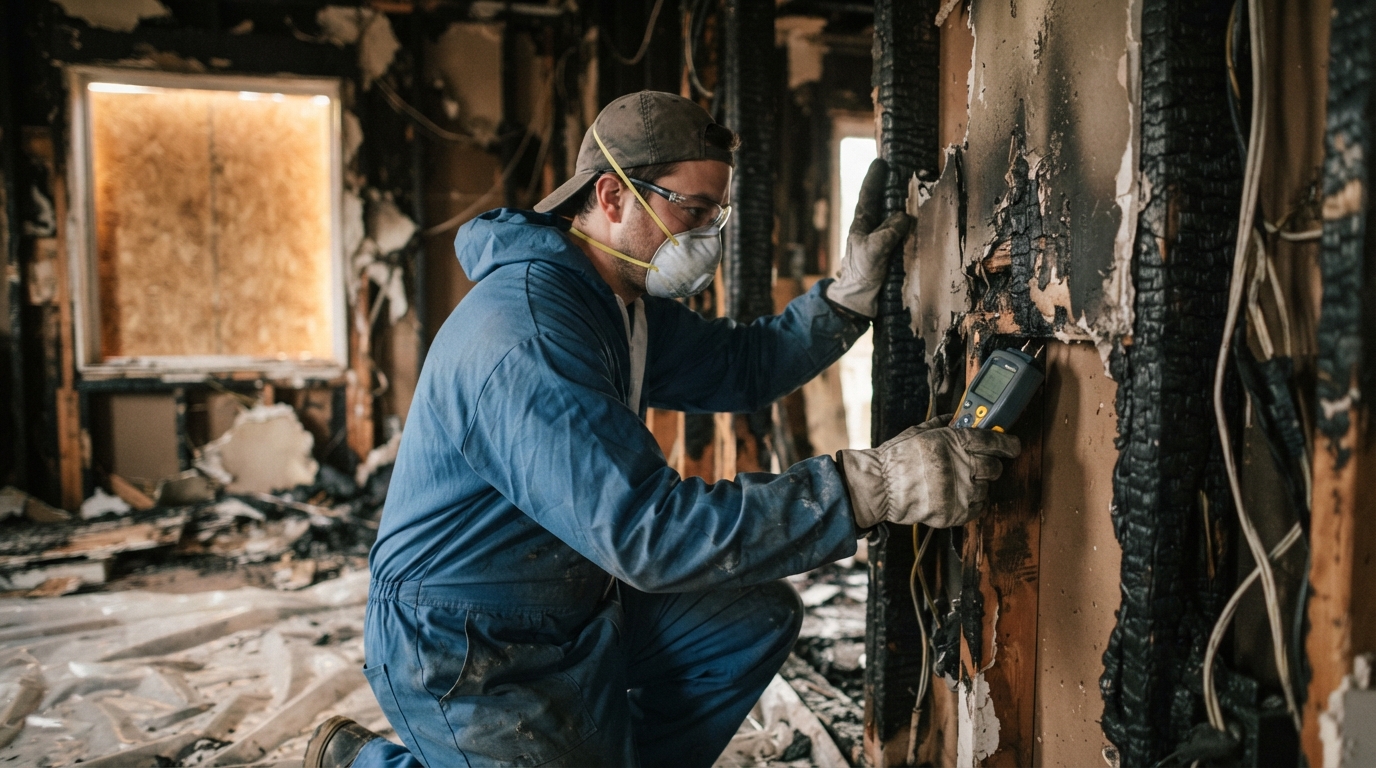
| Structural assessment | Visual inspection only | Includes moisture readings and hidden damage checks |
| Insurance documentation | Informal, may lack detail | Structured reports supporting claims |
| Odor elimination | Temporary masking | Treatment aimed at the source of the odor |
Homeowners in Hinsdale, IL dealing with older housing stock may also face additional considerations, such as outdated electrical systems or plaster walls that react differently to heat and smoke than modern materials. These structural variables often influence how long repairs take and which techniques apply.
Frequently Asked Questions
How soon should fire damage cleanup begin after a fire is extinguished? Cleanup is generally most effective when started within 24 to 48 hours, since soot and moisture both cause progressively worse damage the longer they remain untreated.
Does fire damage restoration also address smoke odor in HVAC systems? Ductwork and HVAC components typically require inspection and cleaning as part of a full restoration plan, since smoke residue can recirculate through a home’s air system.
Is water damage usually part of fire restoration? Yes, because firefighting efforts commonly leave standing water or saturated materials that must be addressed to prevent secondary mold growth.
Can a property be fully restored after a severe fire? Severity varies by case, but a structured restoration process involving assessment, cleanup, and rebuilding is designed to bring a property back to its pre-loss condition where structurally feasible.
Next Steps for Property Owners
Readers evaluating local restoration options can Find Parkside Restoration Near You on Google Maps for published service area and contact information.
Fire recovery involves more than visible cleanup, since underlying moisture, air quality, and structural integrity all factor into a complete restoration outcome. Understanding each phase of the process helps property owners set realistic expectations for timelines and the scope of work involved.