Soreness After SoftWave Treatment: What’s Normal and What to Report
Mild soreness, tenderness, or skin redness over the treated area is a common, short-lived response after SoftWave treatment and other forms of shockwave therapy, and it usually settles within a few days. Pain that keeps getting worse, swelling that grows, numbness that lingers, or skin that breaks down are not typical and should be reported to the treating provider.
Many people start shockwave therapy after months of a tendon, heel, hip, or shoulder problem that hasn’t responded to rest or stretching. After a first session, it’s natural to pay close attention to every twinge. Knowing which sensations are expected, and which ones deserve a phone call, helps patients stay calm and give their provider useful feedback.
What Is SoftWave Treatment?
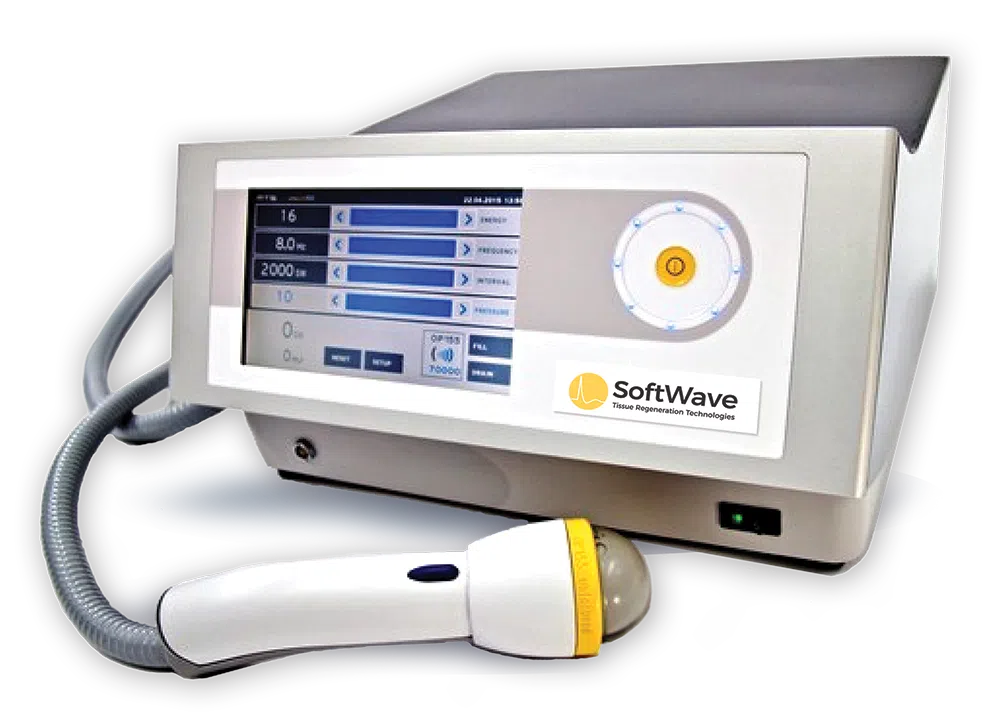
SoftWave is a type of extracorporeal shockwave therapy, meaning the energy is delivered from outside the body through the skin. An applicator placed over the treatment area sends acoustic pressure waves into the tissue. Unlike some shockwave devices that concentrate energy on a small focal point, SoftWave uses an unfocused, electrohydraulic design that spreads energy over a broader area.
The treatment is non-invasive. There are no incisions or injections, and sessions are usually short, often in the range of 5 to 15 minutes. A course of care commonly involves several sessions spaced over a few weeks, with the exact number depending on the condition and how the tissue responds.
Because the waves are meant to stimulate a biological response in tendons, fascia, and other soft tissue, it’s not surprising that the area can feel different afterward.
Why Can the Area Feel Sore After a Session?
Shockwave therapy applies mechanical energy to tissue that is often already irritated. During and after treatment, the area may become more sensitive for a short time.
The pressure of the applicator and the acoustic waves themselves can leave the area tender. Tissues that have been irritated for a long time may react more noticeably to new input, and small surface blood vessels can respond with redness or, occasionally, minor bruising.
Patients often describe the feeling as a dull ache or a bruised sensation rather than sharp pain. It may be most noticeable when the area is pressed, stretched, or loaded, such as walking on a treated heel or lying on a treated hip.
What Side Effects Are Typical?
Published reports on extracorporeal shockwave therapy describe a fairly consistent set of mild, temporary effects, such as skin reddening, occasional bruising, and discomfort during treatment.
A patient leaflet from Calderdale and Huddersfield NHS Foundation Trust, which offers shockwave therapy for tendon and fascia problems, lists similar possibilities: bruising, pain, local swelling, skin reddening, and numbness or altered sensation. The leaflet notes that these effects generally resolve within the week before the next treatment.
Broader reviews have reached similar conclusions about overall safety. A 2023 narrative review in the journal Healthcare described shockwave therapy as a safe treatment for musculoskeletal pain, with few adverse effects reported in the literature.
In practical terms, the following are generally considered within the normal range:
- Tenderness or a dull ache in the treated area for one to two days
- Pinkness or redness of the skin that fades within hours to a day or so
- Mild, temporary swelling
- Small areas of bruising, especially in people who bruise easily
- A brief tingling or “buzzing” sensation that settles on its own
What Does the First 48 Hours Usually Look Like?
Every person responds differently, but a common pattern looks something like this.
During and right after the session: The area may feel warm, tingly, or tender. Redness is often visible where the applicator was placed. Some people feel less pain right away; others feel more aware of the area.
Later that day and overnight: A dull ache may build as the day goes on, especially after walking, standing, or using the treated arm or leg. Sleep can be a little less comfortable if the person lies directly on the treated side.
The next one to two days: Soreness typically peaks and then begins to ease. By the second or third day, most people notice that the area feels closer to how it did before treatment, or better.
Short-term tenderness on its own doesn’t predict the final outcome of a treatment course. What matters more is the overall trend across several sessions.
Ice, Pain Relievers, and Activity: What to Ask
Aftercare instructions vary from one clinic to another, so it’s best to ask before the first session.
Some shockwave services advise against icing the treated area or using anti-inflammatory medications such as ibuprofen right after treatment. The Calderdale and Huddersfield NHS leaflet, for example, asks patients to avoid both, reasoning that they may interfere with the healing response the treatment is intended to trigger, while noting that simple pain relievers are acceptable if needed. Other providers may give different guidance based on the condition and the patient’s health history.
Anyone who takes medication for another health condition, especially blood thinners, should never stop or change it without talking to the prescribing doctor.
Activity guidance also differs. Many people return to normal daily activities the same day, but it may be wise to avoid unusually heavy loading of the treated area, such as a long run on a newly treated heel, until the provider has said it’s appropriate. A simple question at the end of each visit, such as “Is there anything I should avoid for the next day or two?”, can prevent guesswork.
Who May Not Be a Good Fit for Shockwave Therapy?
Part of avoiding problems after treatment is screening carefully beforehand. Clinical guidance from shockwave providers commonly lists situations where the treatment is avoided or approached with extra caution. The Calderdale and Huddersfield NHS leaflet, for instance, lists pregnancy, a cardiac pacemaker, treatment over lung tissue, known cancer in or near the treatment site, infection or open wounds in the area, a recent corticosteroid injection, growth plates that haven’t finished developing, and certain blood-thinning medications.
This is why a thorough evaluation should come before the first session. A provider offering chiropractic shockwave therapy or any other form of shockwave care should ask about medications, recent injections, implants, and overall health, then explain why the treatment is or isn’t a reasonable option.
What Should Be Reported After SoftWave Treatment?
Most post-treatment soreness is mild and fades on its own. The following, however, are worth contacting the provider about promptly:
- Pain that keeps increasing after the second day instead of easing
- Swelling that grows, feels hot, or spreads beyond the treated area
- Bruising that is large or appears in someone taking blood thinners
- Numbness, tingling, or weakness that doesn’t go away
- Skin that blisters, breaks open, or shows signs of infection, such as pus or spreading redness
- A sudden “pop,” sharp pain, or loss of strength in a treated tendon
Severe pain, signs of a blood clot such as one-sided calf swelling and warmth, or fever with spreading redness should be treated as urgent and evaluated by a medical provider right away.
How to Track Your Response Between Sessions
A short log can make follow-up visits far more productive. Before each session, it helps to jot down how sore the area was after the last visit and for how long, whether daily pain levels have changed, which activities feel easier or harder, and any bruising, redness, or numbness along with how long it lasted.
These details help the provider adjust intensity, spacing between sessions, or the overall plan. They also help patients see progress that might otherwise go unnoticed, since improvements with shockwave therapy often build gradually over weeks rather than all at once.
Shockwave care is frequently combined with other forms of chiropractic therapy, such as adjustments, rehabilitation exercises, or laser therapy, depending on the condition. When several treatments are part of the same plan, noting what changed after each visit makes it easier to see what’s helping.
For people in Glendale who want a deeper look at how the technology works and which conditions it is typically used for, an overview of chiropractic shockwave therapy can be a helpful starting point before an evaluation.
Knowing the Difference Between Normal Soreness and a Warning Sign
Soreness after SoftWave treatment is usually a brief, expected response: a day or two of tenderness, some redness, and perhaps a small bruise. These effects tend to fade between sessions and don’t, by themselves, say anything about how well the treatment will work over time.
The key is knowing the pattern. Mild discomfort that eases within a few days is typical. Pain that worsens, swelling that spreads, numbness that persists, or skin changes that look like infection are not, and they should be reported. Asking about aftercare before the first session, keeping a short symptom log, and staying in clear communication with the provider all make the process smoother and safer.
About Trinity Advanced Health
Trinity advanced health is a chiropractic office in Glendale, AZ, offering SoftWave therapy and laser therapy alongside chiropractic adjustments and spinal decompression. Dr. David Iszler, who is certified in the Torque Release Technique, practiced for 24 years in Casper, Wyoming, before bringing his practice to Arizona in 2018. Patients can reach the team at (602) 603-5444 or get directions to the office on Google Maps.