How Orthopedic Braces Support Recovery and Long-Term Joint Health
Bottom line:
An orthopedic brace stabilizes an injured or weakened joint, limits harmful motion, and supports healing after injury, surgery, or with arthritis.
Custom-made and custom-fit bracing options exist depending on the condition and fit required.
Proper fitting and periodic adjustment matter more for long-term joint health than the brace style alone.
An orthopedic brace is a medical device designed to stabilize a joint, limit motion outside safe ranges, and support tissue during healing after an injury, surgery, or with a condition like arthritis. For residents of Twin Falls, ID, understanding how these devices work can clarify whether a brace fits into a recovery plan or an ongoing joint management strategy.
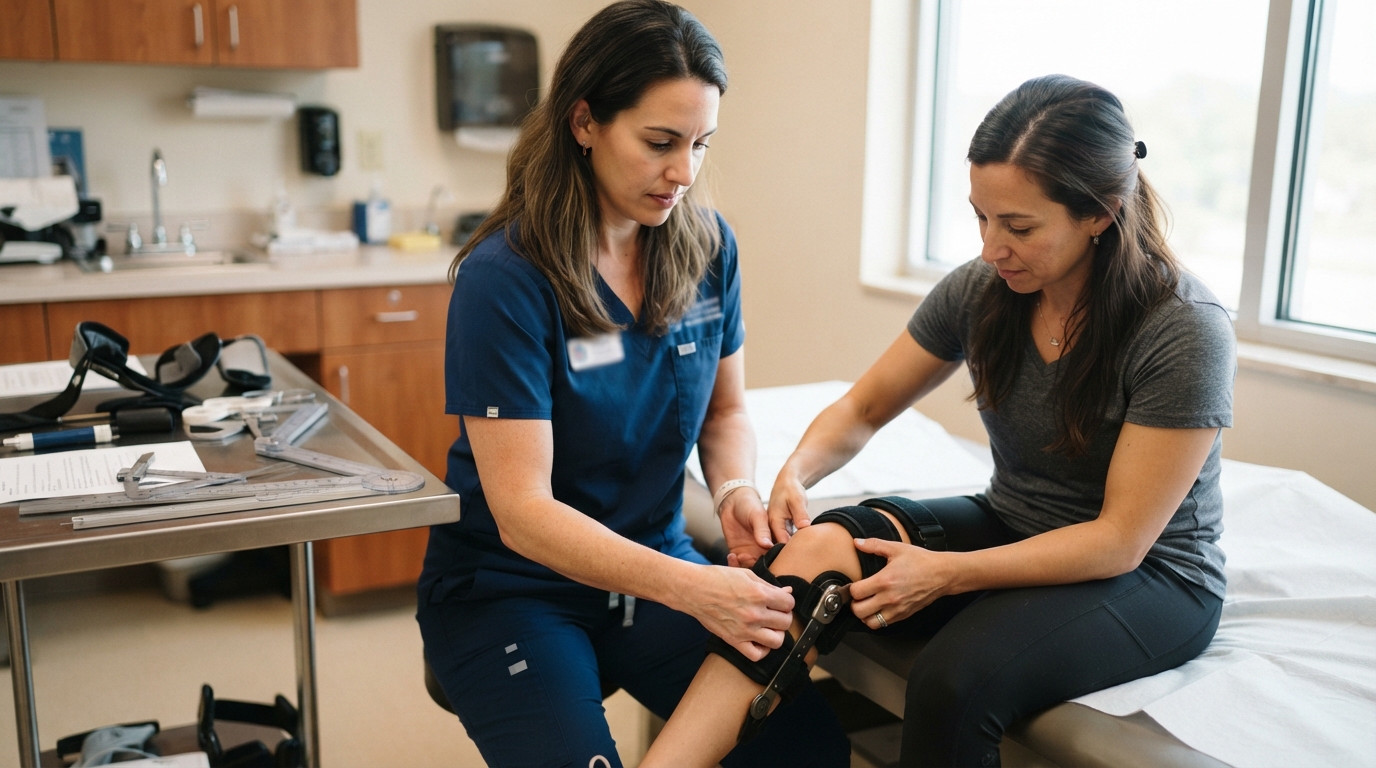
An Orthopedic Brace Twin Falls ID works by applying external support to a joint that has lost some of its natural stability, often due to ligament damage, muscle weakness, or structural wear. An orthopedic brace may be prescribed after an acute injury, following orthopedic surgery, or as part of managing a chronic condition such as osteoarthritis. The right device depends on the joint involved, the severity of instability, and the patient’s activity level.
How Bracing Fits Into the Recovery Process
Bracing is rarely used in isolation. It typically works alongside physical therapy, activity modification, and sometimes other medical interventions to support the body as it heals or adapts.
After injury or surgery: A brace can limit motion that might stress healing tissue while still allowing controlled movement.
During rehabilitation: Physical therapists may adjust a brace’s settings as strength and range of motion improve.
For chronic joint conditions: Bracing can reduce pain by redistributing load away from damaged cartilage or ligaments.
Clinical guidance on knee bracing notes that a knee brace is a medical device that stabilizes the knee joint and holds it in place, and healthcare providers use braces to protect and support the knee after an injury. The same source points out that some patients may need to wear knee support after knee surgery.
It is worth noting that bracing guidelines vary by condition. For hip osteoarthritis, physical therapy guidance indicates that clinicians should not use bracing as a first line of treatment, and a brace may be used after exercise or manual therapies are unsuccessful in improving certain activities for patients with mild-to-moderate hip osteoarthritis. This distinction matters because bracing decisions should be individualized rather than applied uniformly across every joint or diagnosis. Readers can review broader physical therapy guidance through the American Physical Therapy Association for context on evidence-based practice standards.
Bracing options generally fall into two categories, each suited to different needs.
| Brace Type | Description | Typical Use Case |
| Custom-made | Built and modified in a lab from patient-specific measurements | Complex deformities, spinal conditions, long-term support needs |
| Custom-fit | Pre-made by manufacturers, then adjusted for individual fit | Standard joint support, faster turnaround, moderate instability |
Custom-fit devices are pre-made by manufacturers and sent to the office before being adjusted, while custom-made devices are produced using detailed patient measurements to build a device in a dedicated lab, with staff trained to gather exact details from the patient to create a top-of-line device designed to offer superior support. Bracing can also extend beyond knees and ankles. Providers in the region note that orthopedic bracing can be used to comfort or support nearly any part of the body, including spinal, cervical, and upper extremity applications.
Long-Term Joint Health Considerations
Bracing is not a permanent substitute for muscle strength or joint mechanics, and long-term reliance should be reassessed periodically with a qualified provider.
1. Fit matters more than brand. A poorly fitted brace can shift load unevenly and cause discomfort rather than relief.
2. Adjustment needs change over time. Muscle atrophy, weight changes, or healing progress can alter how a brace should be set.
3. Bracing supports, but does not replace, rehabilitation. Strength and range-of-motion work remain central to joint recovery.
Device manufacturers and orthopedic literature describe bracing as useful both to prevent injuries from motions outside a joint’s biomechanical limits and to promote proper healing of a joint following an injury or surgery, and to stabilize joints with arthritis, thereby alleviating pain. This dual role, protective and therapeutic, is part of why bracing decisions typically involve a clinician familiar with the patient’s specific joint history.
Does a brace replace physical therapy? No. Bracing is generally used alongside physical therapy rather than as a substitute, since muscle strength and joint mechanics still need to be addressed directly.
How long will a brace need to be worn? Duration depends on the underlying condition. How long a person needs to wear a knee brace depends on why they need it, and some conditions call for bracing only during specific activities.
Can bracing help with arthritis pain? Bracing can reduce pain in some joints by redistributing load, though guidelines vary by joint and severity, so a provider evaluation in Twin Falls, ID is recommended before starting use.
Local Availability and Next Steps
A provider of orthopedic bracing and related orthotic services based in Twin Falls, ID, serving patients throughout the surrounding area.
Published details for Learn More About OrthoPro of Twin Falls outline custom and pre-made bracing options available for local patients.